


More than 300,000 residents living in supported housing and temporary accommodation will soon be able to increase their working hours without risking a loss in income, following new regulations laid in Parliament on Monday 6 July 2026.
The changes are designed to address a long-standing inconsistency between Housing Benefit and Universal Credit, which has historically left some of the most vulnerable individuals facing a difficult choice: remain out of work or risk losing vital housing support.
Ending the ‘Cliff Edge’ in Housing Benefit
Under the previous system, Housing Benefit rules were less generous than those applied to Universal Credit. This imbalance created what policymakers have described as a “cliff edge”, where individuals who increased their earnings could see a sharp reduction in support – effectively discouraging them from entering or progressing in work.
In some cases, landlords were reportedly reluctant to encourage tenants to take up employment opportunities due to concerns over rental income stability.
The newly announced reforms will align Housing Benefit calculations with Universal Credit, ensuring a more consistent and supportive approach. When the changes come into force in October 2026, an estimated 315,000 people will benefit from improved financial incentives to work.
Supporting the Transition from Welfare to Work
The reforms form part of a broader government strategy aimed at shifting from what it describes as a “welfare state to a working state”. The intention is to remove structural barriers that prevent people, particularly those in supported housing, from engaging with the labour market.
This latest measure builds on a series of recent policy interventions, including:
- Adjustments to Universal Credit to remove disincentives to employment
- Introduction of “Right to Try” legislation, allowing people with health conditions or disabilities to test employment without immediate reassessment
- Expansion of employment support programmes tailored to individual needs
Minster for Social Security and Disability, Sir Stephen Timms, commented:
“The system we inherited was actively pushing some of the most vulnerable residents away from work rather than towards it. These changes fix that - ensuring residents can keep more of what they earn, so that taking a job or increasing hours always pays better than benefits.
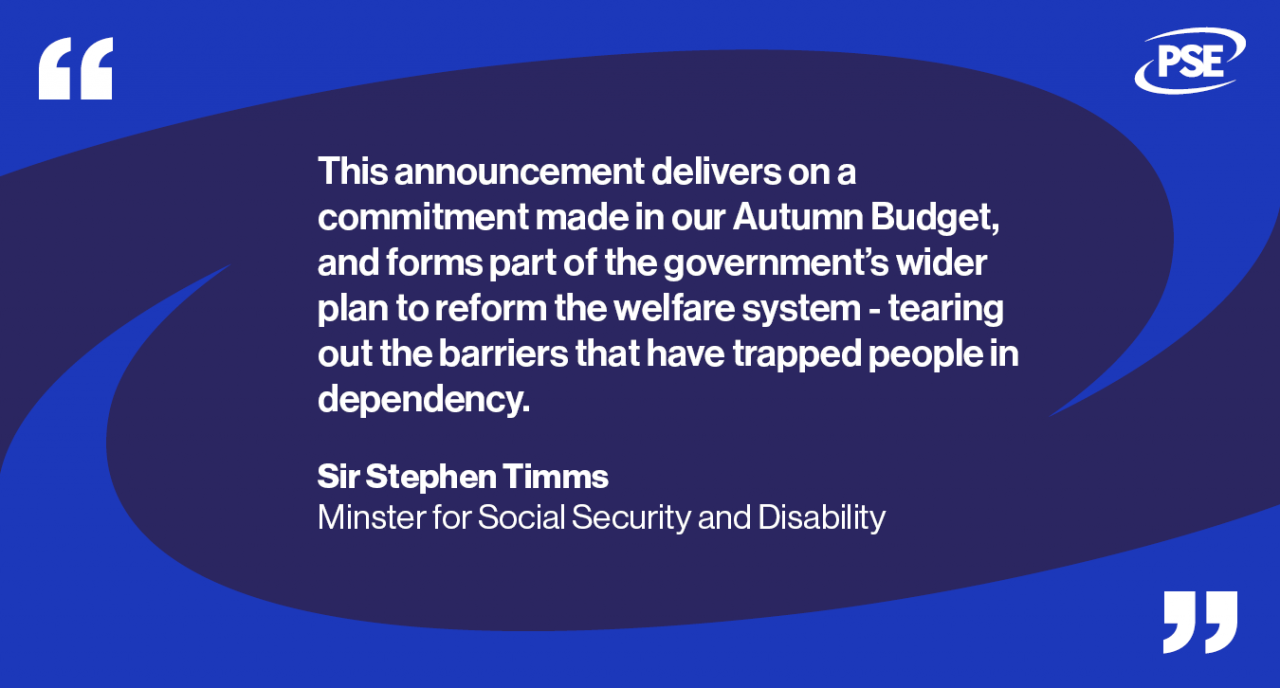
“This announcement delivers on a commitment made in our Autumn Budget, and forms part of the government’s wider plan to reform the welfare system - tearing out the barriers that have trapped people in dependency.
“We are replacing that system with one that rewards work and ensures people keep more of what they earn, while protecting those who need it most.”
Wider Employment Support Initiatives
Alongside the Housing Benefit changes, the government continues to roll out its Connect to Work programme, which aims to provide personalised, locally delivered support to jobseekers. The scheme is expected to help up to 300,000 people move into employment.
Additionally, 1,000 “Pathways to Work” advisers are being deployed to assist individuals who were previously considered unlikely to return to work, offering targeted guidance and ongoing support.
For professionals across local authorities, housing associations, and social care, these reforms may have several practical implications:
- Increased tenant engagement with employment services
- Reduced risk of rent arrears linked to income volatility
- Greater collaboration required between housing and employment support teams
- Policy alignment with wider welfare reform priorities
Housing providers, in particular, may need to review tenant communications and support strategies to ensure residents are fully aware of the changes and opportunities available to them.
Image credit: iStock