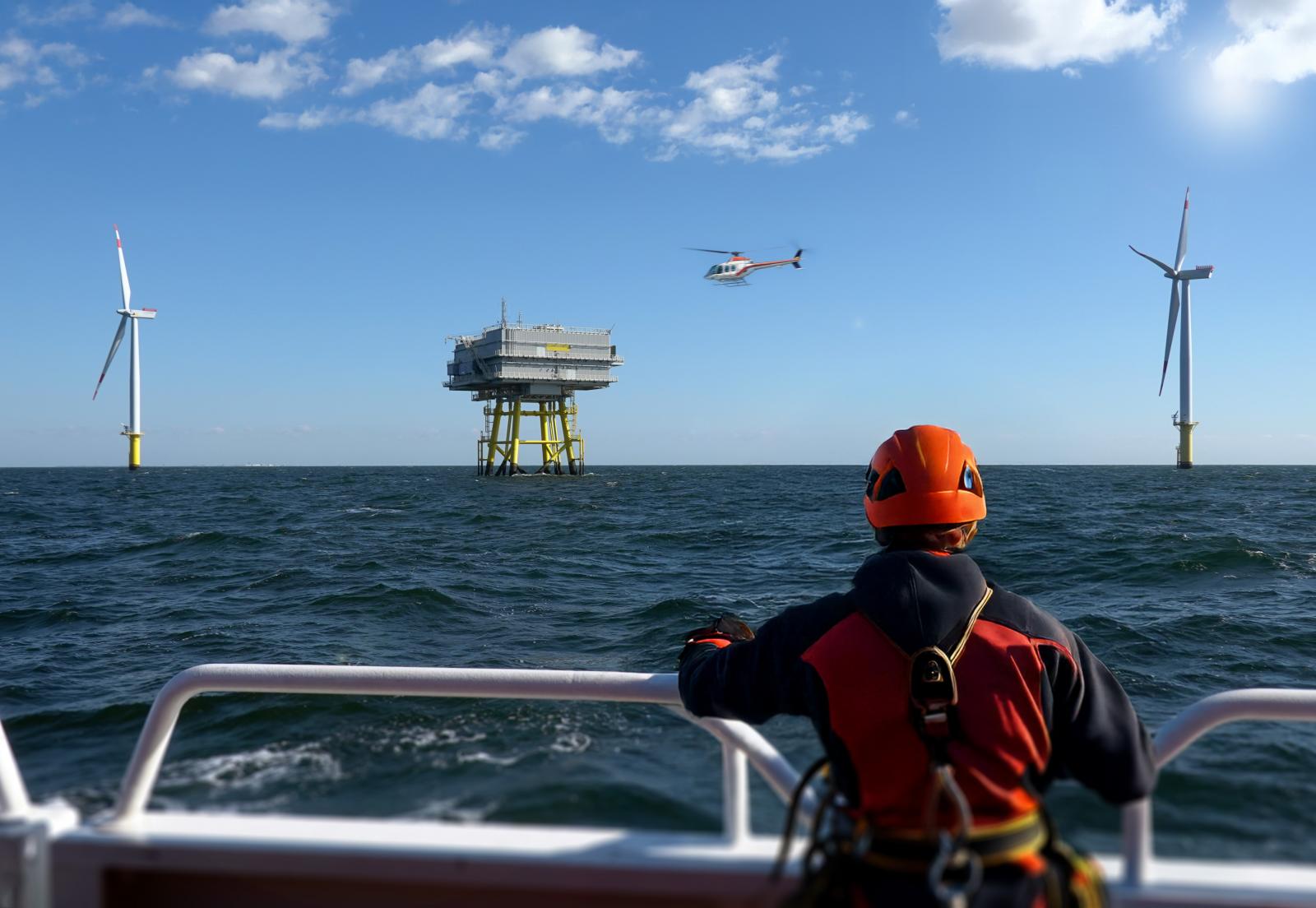

Scotland has awarded almost £1.7 million to three projects aimed at strengthening the skills base needed to support the rapid expansion of its offshore wind sector. The funding is part of a wider push by the Scottish Government to ensure communities and businesses benefit from the economic opportunities offered by renewable energy.
The £1,679,143 package will be shared between:
- University of the Highlands and Islands – £1,171,139
- Engineering Construction Industry Training Board (ECITB) – £372,842
- North East Scotland College – £135,162
The investment will help establish a regional skills hub for the Highlands and Islands, expand engineering construction programmes, and enhance specialist training provision in the north-east. Collectively, the projects are also expected to attract additional private sector investment of a similar scale, amplifying their impact.
Building a skilled workforce for offshore wind
The funding comes via the Offshore Wind Skills Programme (OWSP), launched in 2026 with a budget of £3.85 million. Its core aim is to develop a workforce capable of supporting the growth of Scotland’s offshore wind industry, which is predicted to play a central role in the country’s economic future.
Further funding rounds will follow, with additional projects to be considered by the OWSP Board throughout 2026 and 2027.
The funded initiatives are designed to improve access to high-quality training and create clearer pathways into employment. By aligning education providers with industry needs, the programme seeks to ensure that businesses can access the talent required to expand, while individuals benefit from secure, well-paid jobs.
Economic impact and job creation
Industry forecasts suggest offshore wind could support up to 49,000 jobs in Scotland, underlining the importance of sustained investment in skills and training infrastructure.
Announcing the funding, Energy Minister Stephen Gethins highlighted the strategic importance of workforce development:
“I am determined to make the most of Scotland’s remarkable energy potential, with industry reports estimating offshore wind could support up to 49,000 jobs in Scotland. That is why it is at the centre of both our energy and economic ambitions.
“The Scottish Government is doing everything within our power to help seize this exciting opportunity, and that starts by focusing on skills to ensure communities benefit directly from employment opportunities and businesses have the skilled workforce they need to grow. Supporting these three projects with almost £1.7 million is central to that, and there will be more to come.
“By bringing businesses together with education and skills providers, the Offshore Wind Skills Programme is the kind of smart, co-ordinated approach we need to shape the future of our renewables sector. Working with partners is vital given the scale of both the opportunities and challenges, and the Scottish–Irish Offshore Wind Internship Pilot is an excellent example of the benefits achieved by working together.
“However, the full benefits of our country’s offshore wind potential will only be realised when Scotland is an independent nation and our energy resources are in our hands.”
Strengthening international collaboration
The announcement was made ahead of a visit to the National Manufacturing Institute Scotland, where discussions included the Scottish–Irish Offshore Wind Internship Pilot. The initiative highlights growing collaboration between Scotland and Ireland in developing talent pipelines and sharing expertise across the renewable energy sector.
Such partnerships are seen as critical in addressing the scale of the workforce challenge, particularly as offshore wind projects accelerate across the UK and Europe.
A long-term investment in Scotland’s green economy
For public sector leaders and policymakers, the announcement reinforces the importance of co-ordinated investment in skills, industry partnerships, and regional training capacity. By targeting funding where it can have the greatest impact, the OWSP is positioning Scotland to remain competitive in a fast-growing global market.
The programme also signals a broader trend: aligning economic development with net zero ambitions, ensuring that the transition to clean energy delivers tangible local benefits.
Image credit: iStock