

Brighton & Hove City Council has submitted a detailed three-year Local SEND Reform Plan to the Department for Education, outlining how it intends to strengthen support for children and young people with special educational needs and disabilities across the city.
The plan has been developed in response to national education reforms set out in the government’s Schools White Paper, Every Child Achieving and Thriving. As part of these reforms, all local authorities are required to produce a Local SEND Reform Plan, demonstrating how they will work alongside education, health and care partners to deliver meaningful improvements in outcomes.
Brighton & Hove’s proposal sets out a vision for a more inclusive and sustainable system for children and young people aged 0 to 25. Central to this is a stronger emphasis on partnership working, aligning services more closely and ensuring that support is delivered in a coordinated way.
The council has identified several key priorities over the next three years:
- Bringing education, health and care services together to operate as a single, joined-up system
- Improving early identification of needs to ensure timely and appropriate support
- Strengthening collaboration with families and improving access to clear, accessible information through an enhanced Local Offer
This approach mirrors the national direction of travel, with a focus on consistency, quality and early intervention across the SEND system.
The roadmap for delivery is structured in three phases:
- Year one – Mobilisation: establishing partnerships, governance structures and initial groundwork
- Year two – Implementation: rolling out key reforms and service improvements
- Year three – Embedding: consolidating progress and ensuring long-term sustainability
Oversight of the plan will sit with the city’s SEND & Alternative Provision (AP) Partnership Board. This group brings together representatives from education, health, social care and the local parent and carer forum, PaCC, ensuring that a broad range of voices informs delivery and accountability.
While the plan demonstrates a clear commitment to reform, local partners have also been candid about the challenges ahead. In particular, they highlight the need for additional national support to address workforce shortages in specialist roles, including educational psychologists and therapy professionals.
These pressures are being felt across the country and are widely recognised as a key barrier to scaling up SEND provision.
Councillor Emma Daniel, Cabinet Member for Children, Families and Youth Services, emphasised both the ambition and the reality facing the city:
“Through the Schools White Paper, the government has set a clear ambition that every child should achieve and thrive, including those with SEND.
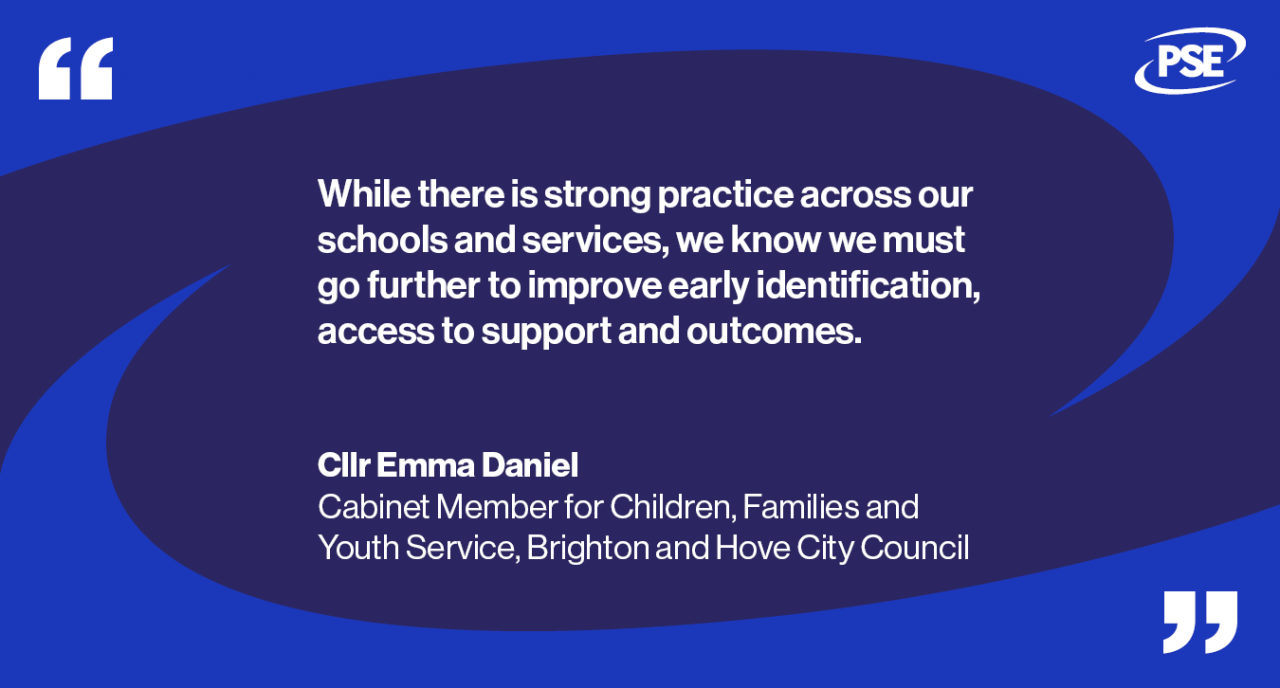
“In Brighton & Hove, demand for SEND support continues to grow across our diverse community. While there is strong practice across our schools and services, we know we must go further to improve early identification, access to support and outcomes.
“Our Local SEND Reform Plan sets out how we will work together with our partners and families to deliver on these national expectations locally, strengthening inclusion, improving joined-up support, and ensuring every child and young person with SEND has the best possible opportunity to succeed.”
The plan is now with the Department for Education, which will carry out a multi-tiered assessment and moderation process to ensure consistency and rigour across all local submissions.
A final decision on approval will be made by the Secretary of State, with local areas expected to receive confirmation by mid-September 2026.
For public sector leaders, the plan offers a clear example of how local systems are responding to national SEND reform – balancing ambition with operational realities, and highlighting the importance of cross-sector collaboration in delivering long-term change.
Image credit: iStock