

Businesses competing for government contracts worth around £90 billion annually will now be judged more heavily on their ability to create high-quality British jobs, address local skills shortages and support young people into apprenticeships and work placements.
The reforms form part of the Government's wider ambition to ensure that every young person has the opportunity to earn or learn, while using public procurement as a tool to deliver economic growth and social value in communities across the country.
Under the new approach, the weighting given to social value commitments in government procurement exercises will increase from 10% to 20% for contracts valued at £5 million or more. The change is designed to ensure that public spending delivers tangible local benefits, including training opportunities, work experience placements and employment creation.
At the same time, ministers are seeking to make public sector contracts more accessible to smaller businesses, scale-ups, innovative firms and civil society organisations. Procurement requirements have been simplified and the threshold at which certain rules apply has been raised to contracts above £1 million, reducing barriers for smaller suppliers and local social enterprises.
The Government believes the changes will help ensure procurement delivers meaningful outcomes for communities, rather than becoming a compliance-driven exercise.
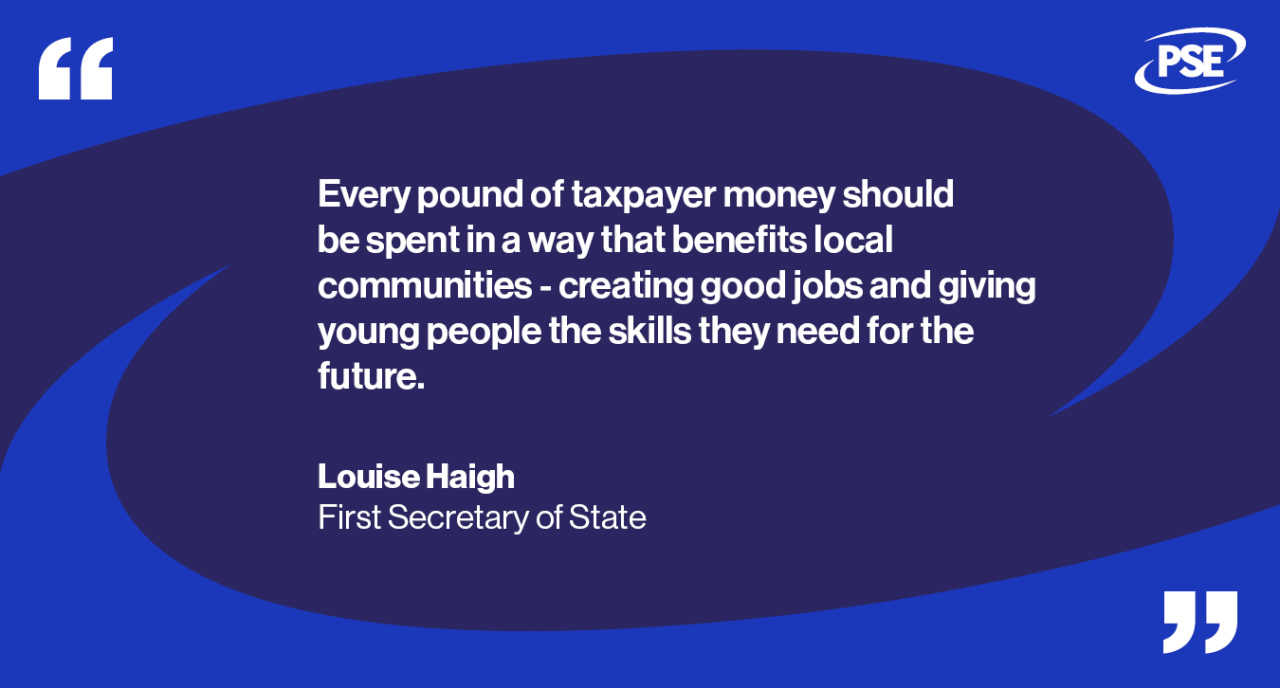
First Secretary of State Louise Haigh said:
“Every pound of taxpayer money should be spent in a way that benefits local communities - creating good jobs and giving young people the skills they need for the future.
“For too long, securing government contracts has been a tick box exercise that fails to deliver the positive change that people feel in their pocket and see in the places they live.
“We are doing things differently. These new rules will ensure the £90 billion that is spent each year through government contracts supports British jobs, skills and people in every postcode.”
Suppliers bidding for contracts will be able to secure additional marks by committing to create local jobs that pay above the legal minimum, treating workers fairly and investing in training programmes that address regional skills gaps. Measures such as providing up to 45 days of work experience will also be recognised during evaluations.
A particular emphasis will be placed on supporting young people who are not in education, employment or training (NEETs), care leavers and individuals living with long-term health conditions.
To ensure commitments translate into real-world outcomes, government departments will introduce key performance indicators (KPIs) for major contracts. Annual progress reports will be published, allowing suppliers' performance against their social value pledges to be scrutinised publicly.
The announcement builds on the Government's intention to use its purchasing power more strategically. Public sector procurement from private sector organisations has risen by more than a third over the past five years, reaching almost £400 billion during 2024/25.
The reforms also align with the National Cloud Infrastructure Programme (NCIP), which is exploring ways to coordinate cloud procurement across the public sector more effectively.
Through the programme, government is working with industry partners to strengthen the UK's digital infrastructure, support long-term digital capability and create new opportunities for young people to develop digital and AI-related skills. Particular focus will be placed on helping those currently outside education, employment or training gain access to future-focused careers.
Ministers believe the approach will help bridge the digital divide, support regional growth and ensure the benefits of the digital economy reach communities across every part of the UK.
Reflecting the Government's commitment to devolved decision-making, local authorities and combined authorities will play a leading role in delivering the reforms.
In the West Midlands, the Mayor is already using social value requirements within procurement processes to support more young people into employment and training. This work includes the 3,000 Futures initiative, which brings together local government, central government and industry partners to help connect young people with opportunities through public contracts.
The programme builds on the region's Youth Guarantee Trailblazer and wider efforts to tackle youth inactivity through innovative employment and skills interventions.
The procurement reforms form part of a broader package of measures aimed at strengthening national security, reducing waste, supporting local economies and creating resilient supply chains.
The Government says the changes will underpin its Modern Industrial Strategy by encouraging long-term investment, supporting innovation and ensuring procurement processes actively contribute to economic growth, skills development and opportunity creation across the country.
Image credit: iStock