

A growing proportion of citizens rely on online systems to apply for benefits, manage identification, and complete essential public-service processes. Yet new research from the Digital Poverty Alliance highlights how access to these services still depends heavily on outside support for a significant number of people.
The report, Accessibility of Government Services, explored public experiences across a range of digital services, including Universal Credit, Pension Credit, ID and driving licence applications, eVisas and school admissions.
Drawing on a nationally representative survey of more than 2,000 people, alongside a Tech4Families cohort study and in-person focus groups in Sunderland and Medway, the findings provide a stark picture of uneven access to digital public services.
Digital access barriers remain widespread
The research reveals just how fragile digital access can be:
- Nearly one in five respondents said they cannot use or access government digital services without support
- 58% reported experiencing login issues
- 26% said they frequently encounter problems when using online public services
These findings underline the challenges many users face even when services are technically available online.
Younger users not immune to digital exclusion
The report also challenges the common assumption that younger people can easily navigate digital services.
Respondents aged 18–24, and to a lesser extent those aged 25–34, reported some of the highest levels of difficulty. Barriers included:
- Lower confidence using digital systems
- Less reliable internet connections
- Limited access to suitable devices
- Greater dependence on others for support
This suggests that digital-first approaches risk overlooking hidden vulnerabilities within younger demographics.
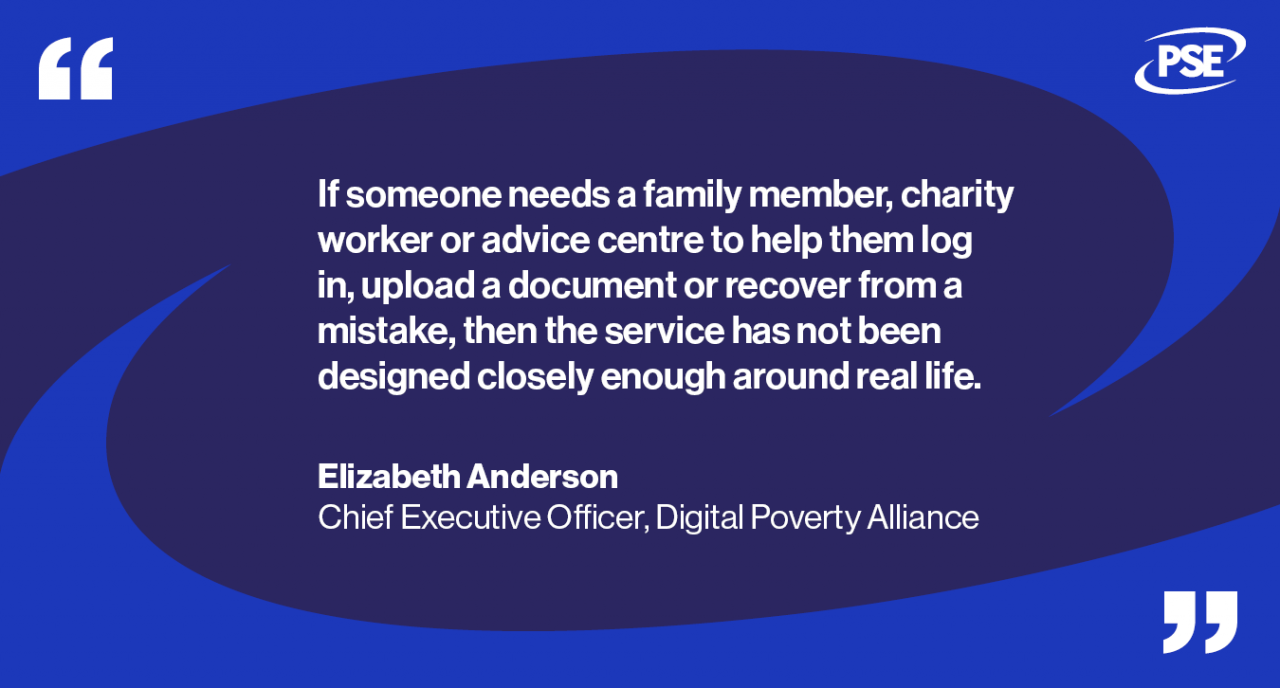
Elizabeth Anderson, Chief Executive Officer of the Digital Poverty Alliance, said:
“Digital government services now sit between people and some of the most important parts of public life. If someone needs a family member, charity worker or advice centre to help them log in, upload a document, or recover from a mistake, then the service has not been designed closely enough around real life.”
Her comments reflect a growing consensus across the public sector that accessibility must go beyond simply putting services online.
Recommendations for more inclusive services
The report sets out a series of recommendations to improve accessibility and usability, with a focus on real-world needs:
- Greater recognition of different types of technology used by citizens
- Improved availability of offline guidance and alternative support routes
- Increased funding for support delivered through the voluntary, community and social enterprise sector
- Better-publicised and more responsive helplines
- Stronger user experience design
- Testing of digital services with people who lack confidence online
A call to action for public sector leaders
For public sector organisations, the findings are a reminder that digital transformation must be inclusive by design. Without adequate support structures, digital-first approaches risk deepening inequalities and excluding those who are most in need of services.
As digital delivery continues to expand across government, the DPA’s research reinforces the importance of designing services around the realities of citizens’ lives – not assumptions about their digital capabilities.
Image credit: iStock