

York and North Yorkshire Combined Authority has approved the region’s first long‑term transport settlement, unlocking £456.2 million of investment to overhaul roads, improve safety and expand sustainable travel options between 2026 and 2030.
The record-breaking four‑year strategy, signed off at County Hall in Northallerton, represents an unprecedented level of funding and flexibility for local leaders, made possible through the formation of the new Combined Authority.
Officials say the deal will accelerate repairs to deteriorating roads, tackle potholes at scale, and transform safety for people walking, wheeling and cycling.
Under the settlement, the Combined Authority will allocate:
- £298.4 million for highways maintenance
- £17.5 million for active travel
- £30 million to support safer streets, including making the school run safer for children and parents
In the first year alone, £70.9 million will be passed directly to local authorities for highways maintenance – a significant uplift compared with previous allocations.
Breakdown for 2026/27:
- North Yorkshire Council: £63.8 million (up from £57.8 million in 2025/26)
- City of York Council: £7.1 million (up from £4.4 million in 2025/26)
Leaders say the increases will allow local authorities to significantly scale up road repair programmes and address long‑standing maintenance backlogs.
Beyond immediate repairs, the Combined Authority will reserve £112 million for major strategic schemes across the region. This will support bus station and rail access improvements, upgrades to key transport corridors, and infrastructure that strengthens connectivity across York and North Yorkshire.
Local councils and transport delivery partners will be invited to submit proposals to access the funding, which officials expect to drive long‑term economic and social benefits.
David Skaith, Mayor of York and North Yorkshire, commented:
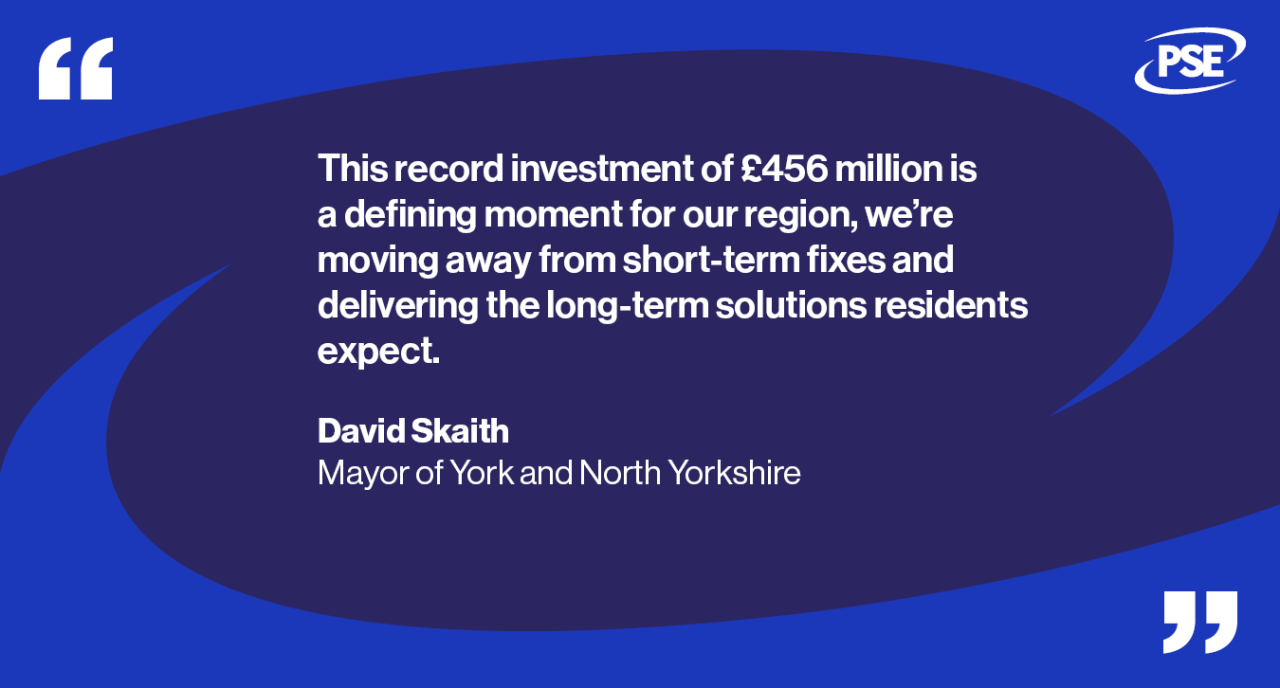
“This record investment of £456 million is a defining moment for our region, we’re moving away from short-term fixes and delivering the long-term solutions residents expect.
“We’re now in the driving seat with greater funding and local control that was previously out of reach and I'm investing a record amount to fix our streets and make them safer for everyone that uses them.”
Today’s decision represents a major shift in how transport funding is delivered, giving regional leaders greater autonomy to target investment where it is needed most.
By consolidating long‑term funding and devolving decision‑making, the Combined Authority can now tailor improvements to local priorities rather than relying on fragmented, short‑term grants.
Image credit: iStock