
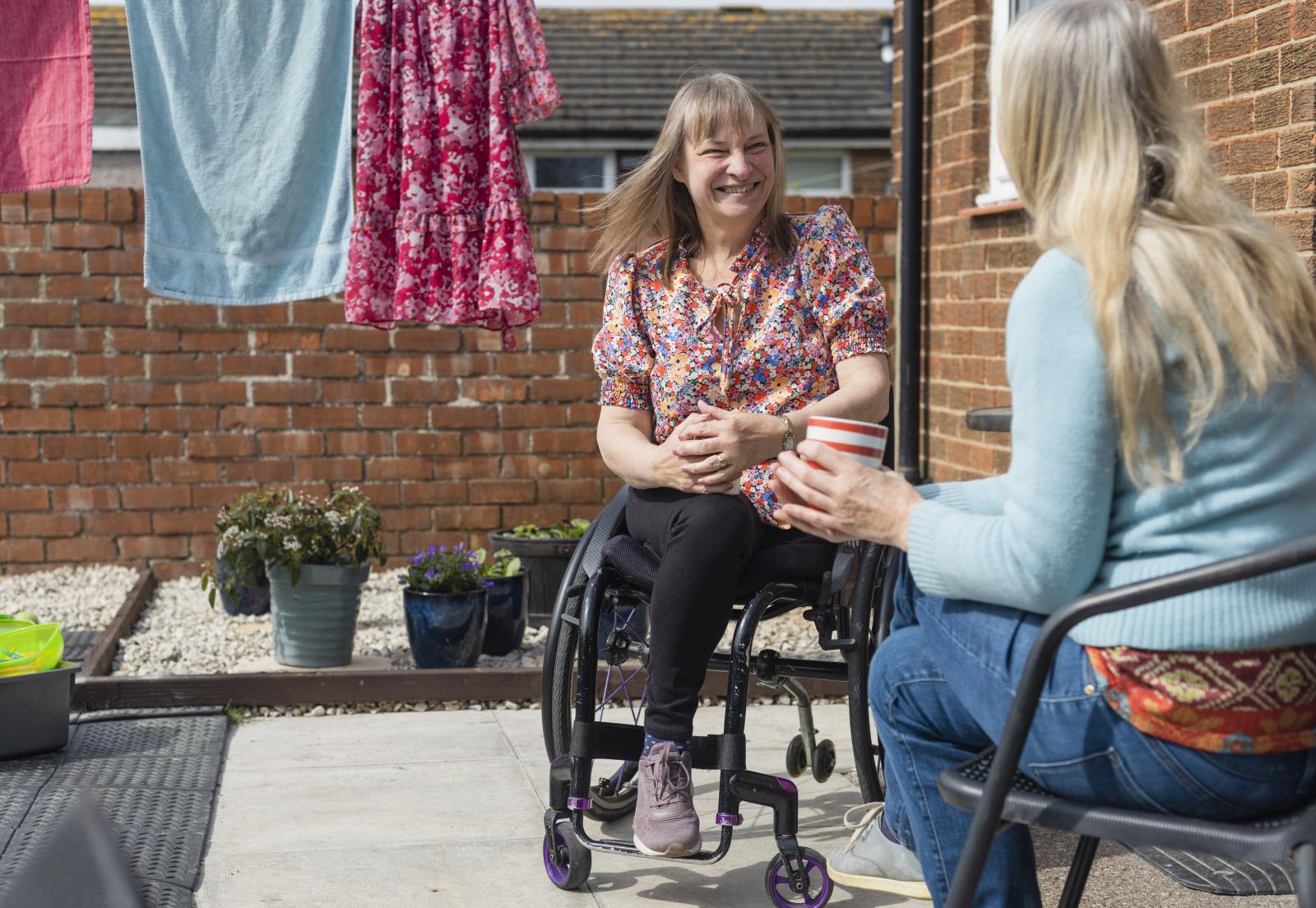

More than 20 local authorities have warned that the government’s proposed minimum target for accessible housing is not ambitious enough, calling for stronger national standards to address a growing shortfall in suitable homes.
The concerns have been raised in response to reforms of the National Planning Policy Framework (NPPF), which propose that at least 40% of new homes meet basic accessibility standards. Councils and housing experts say this target could be significantly higher.
An informal survey conducted by the Centre for Ageing Better found overwhelming support among councils for increasing the national minimum, with many already exceeding the proposed threshold.
Data obtained through Freedom of Information (FoI) requests shows that several local authorities are delivering much higher levels of accessible housing in practice.
For example:
- In Bassetlaw, 90% of more than 1,000 homes built between 2022 and 2025 meet the M4(2) accessibility standard, including step‑free access and adaptable layouts
- In Nuneaton and Bedworth, planning policy requires 95% of new homes in major developments to meet M4(2) standards, unless developers can justify exceptions
These examples, campaigners say, demonstrate that higher targets are both feasible and deliverable.
The Housing Made for Everyone (HoME) Coalition, co‑chaired by the Centre for Ageing Better and Habinteg Housing Association, is now urging the government to raise its ambitions. The coalition argues that stronger national targets would provide clarity for developers, ensure consistent delivery across regions, and help reduce the growing gap between housing supply and accessibility needs.
The consultation on proposed changes to the NPPF closed in March 2026, with a government response expected in the coming months.
The push for higher targets comes against a backdrop of widespread unmet need.
Analysis by the Centre for Ageing Better found that 12 million people in the UK are currently living in homes that do not meet their accessibility requirements. Across England:
- 87% of homes do not meet the four basic accessibility criteria needed to make a property easily visitable
- Accessibility varies widely by region, with 17% of London homes meeting these standards compared to just 8% in the North West and West Midlands
Campaigners warn that without stronger policy intervention, this gap will continue to grow.
The FoI research also highlighted inconsistencies in how councils measure and report accessible housing delivery.
Many local authorities do not systematically record the number of accessible homes built or planned within their areas, making it difficult to track progress and plan effectively.
Improving data collection is seen as critical to ensuring that accessible housing targets are met and monitored.
Demand for accessible housing is expected to increase significantly as the population ages.
Accessible homes, which are often designed to M4(2) standards, include features such as step‑free access, wider doorways, and adaptable layouts, allowing people to live independently for longer and reducing the need for costly adaptations later. Advocates say building homes to these standards from the outset is both a social and economic priority.
Public opinion also appears to support stronger action.
Previous polling commissioned by the Centre for Ageing Better found that 77% of people believe all new homes should be built to standards that allow residents to remain independent as they age or if they become disabled.
Campaigners say this reflects growing awareness of the importance of accessible housing in supporting health, wellbeing, and independence.
The government had previously announced plans to make step‑free access and basic accessibility features mandatory for all new homes, but progress has stalled.
A second consultation that was intended to finalise implementation, has yet to materialise, leaving local authorities to set their own standards in the absence of updated national requirements.
The HoME Coalition and local councils say there is now a clear case for stronger national leadership.
They argue that raising the minimum target within the NPPF would help accelerate the delivery of accessible homes, reduce inequalities and future‑proof the housing stock.
Without action, they warn, millions of people will continue to live in homes that limit independence and quality of life.
The Centre for Ageing Better’s Head of Homes, Millie Brown, commented:
“Having a minimum target of new housing that has to meet higher accessibility standards is a positive step forward and is an important recognition from the government of the importance of building more homes that meet the needs of our country’s growing ageing and Disabled populations.
“But we are not alone as an organisation in believing that the government should go further if it really wants to tackle the scale of the issue here. Local authorities, who know only too well what can be practically achieved, have also echoed this call.
“The real risk is that by setting the minimum target too low, local authorities will not be closing the accessibility need gap quickly enough, leaving many of their residents to continue living in homes which make their day-to-day living difficult for years to come, putting them at risk of injury and even death.
“Having insufficient minimum targets also sets up the risk of deepening the postcode lottery of accessible housing with some local authorities happy to just hit the minimum target while others treat the issue with a higher priority and achieving 80-95% accessible housing, therefore making it much easier for their residents to find a home in their local area which meets their accessibility needs.
“Everyone deserves a good quality home that keeps them safe, healthy, and secure. Accessible homes enable people with mobility issues or disabilities to live independently and safely, helping avoid injuries and falls. Everyone can benefit from accessible homes, including families using prams and anyone who has older people or friends with mobility issues visiting them. The government should be aiming to make this a reality for more people, more quickly.”
Image credit: iStock