


The Information Commissioner’s Office (ICO) has published new guidance to help public authorities handle Freedom of Information (FOI) requests involving artificial intelligence (AI), as the use of AI tools continues to reshape how requests are created and submitted.
The guidance responds to increasing concern from FOI practitioners about the growing volume and complexity of AI‑generated requests, which are placing additional pressure on public sector teams.
According to the ICO, public authorities are seeing a rise in FOI requests generated by AI tools that can:
- Misquote or misunderstand FOI legislation
- Contain unclear or confusing wording
- Require significant clarification before processing
This trend is creating new challenges for FOI teams already managing high workloads, with the risk of delays, errors and increased complaints if requests are not handled effectively.
The ICO says the new guidance is designed to provide practical, day‑to‑day support for managing these evolving demands.
A key principle of the guidance is that all FOI requests must be handled fairly and consistently, regardless of how they are created.
Whether a request is written by an individual or generated using AI, public authorities remain legally obliged to respond in line with the Freedom of Information Act.
The guidance helps practitioners balance this obligation with the need to manage increasingly complex and sometimes inaccurate submissions.
The ICO has focused the guidance on common challenges reported by FOI professionals.
These include requests generated using AI that incorrectly reference legislation, handling higher volumes of requests that require refinement or clarification, and ensuring consistent processes are followed even when dealing with poorly constructed or ambiguous queries.
The aim is to help authorities work more efficiently while maintaining compliance with statutory requirements.
In addition to internal handling, the guidance also encourages public authorities to support better quality FOI requests.
It includes examples of clear, practical wording that organisations can use to:
- Encourage responsible use of AI by requesters
- Request clarification where needed
- Help individuals refine their questions to make them easier to process
The ICO says this approach can reduce unnecessary delays and improve outcomes for both requesters and organisations.
The new guidance draws on the ICO’s casework experience, as well as direct engagement with FOI practitioners, stakeholders and AI specialists.
By reflecting real‑world challenges already emerging across the public sector, the guidance is intended to provide immediately relevant and practical support rather than purely theoretical advice.
The guidance applies to all public authorities subject to the Freedom of Information Act, including central and local government bodies, NHS organisations and other public sector institutions.
Deborah Clark, the Information Commissioner’s Office’s Upstream Regulation Manager, said:
“FOI practitioners have told us clearly that the rise in AI-generated requests is changing the day-to-day reality of their work. They are seeing higher volumes of requests, a greater complexity of request, and more cases that need careful clarification before they can be processed.
“This guidance is about giving teams practical, sensible support, not adding new burdens. It does not change the law or create new requirements, instead it helps teams apply existing FOI principles consistently, regardless of how a request is created. Used responsibly, AI also has the potential to help public authorities improve how they handle FOI requests, and this guidance sits alongside our wider work to support innovation that delivers real benefits for organisations and the public.
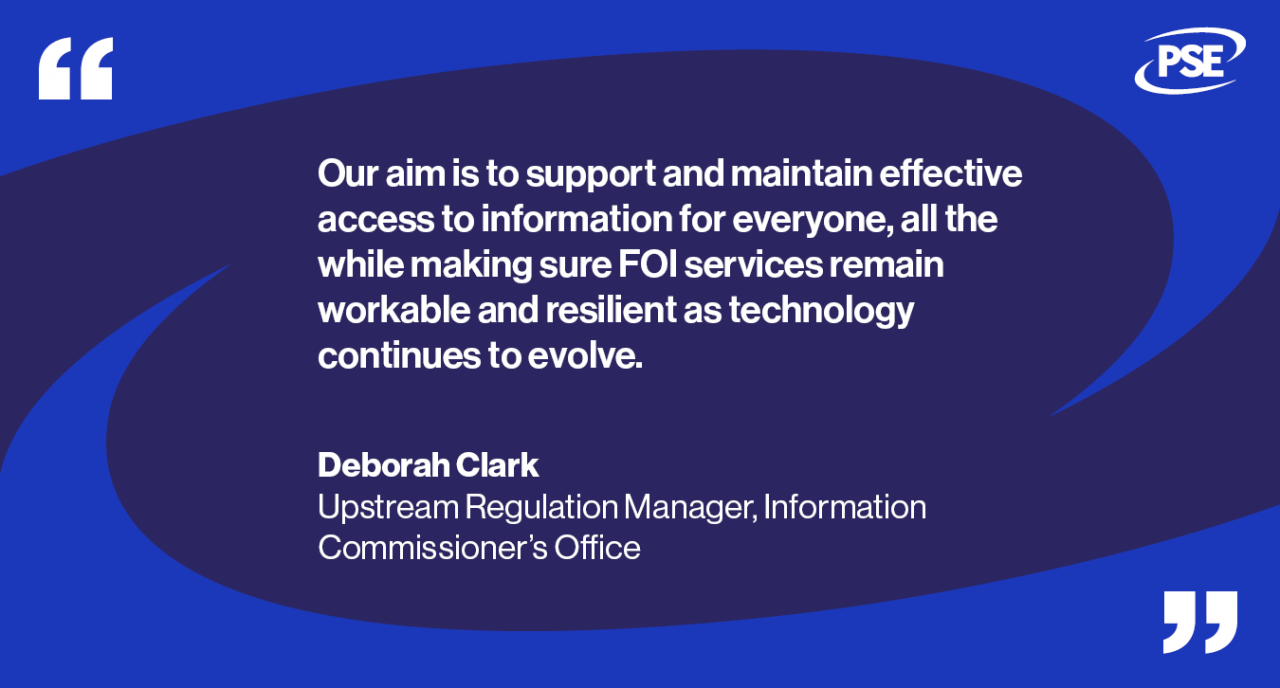
“Our aim is to support and maintain effective access to information for everyone, all the while making sure FOI services remain workable and resilient as technology continues to evolve.”
As AI tools become more widely used by the public, the volume and nature of FOI requests are expected to continue evolving.
By providing clarity, consistency and practical support, the regulator aims to ensure FOI services remain effective, transparent and accessible, even as the technology landscape changes.
Image credit: iStock