


The UK Government is inviting organisations across the public, private and voluntary sectors to help reshape employment support through a new Pathways to Work Innovation Fund, set to open for bids in September.
Positioned as a national “call to action”, the fund aims to surface bold and genuinely new ideas that can help disabled people and those with health conditions not only enter work but stay and progress in employment.
A growing economic and social challenge
The initiative arrives at a pivotal moment. Around 2.8 million people are currently out of work due to ill-health, while the Keep Britain Working review estimates that health-related economic inactivity is costing the UK economy a staggering £212 billion a year.
Against this backdrop, ministers are seeking collaborative solutions, bringing together employers, charities, technology innovators and people with lived experience, to tackle long-standing barriers to work.
Innovation at the heart of reform
The Pathways to Work Innovation Fund sits within a broader £3.5 billion package designed to create more personalised and effective employment support.
Organisations will be encouraged to pilot fresh approaches, potentially including:
- Technology-led employment solutions
- Community-based support models
- New employer engagement strategies
- AI-driven tools to better match people with jobs
An expert panel, including Paralympian Tanni, Baroness Grey-Thompson, will help shape the fund and assess bids, ensuring lived experience plays a central role in decision-making.
Work and Pensions Secretary Pat McFadden said:
“We inherited a welfare system which has locked too many disabled people and those with health conditions out of work.
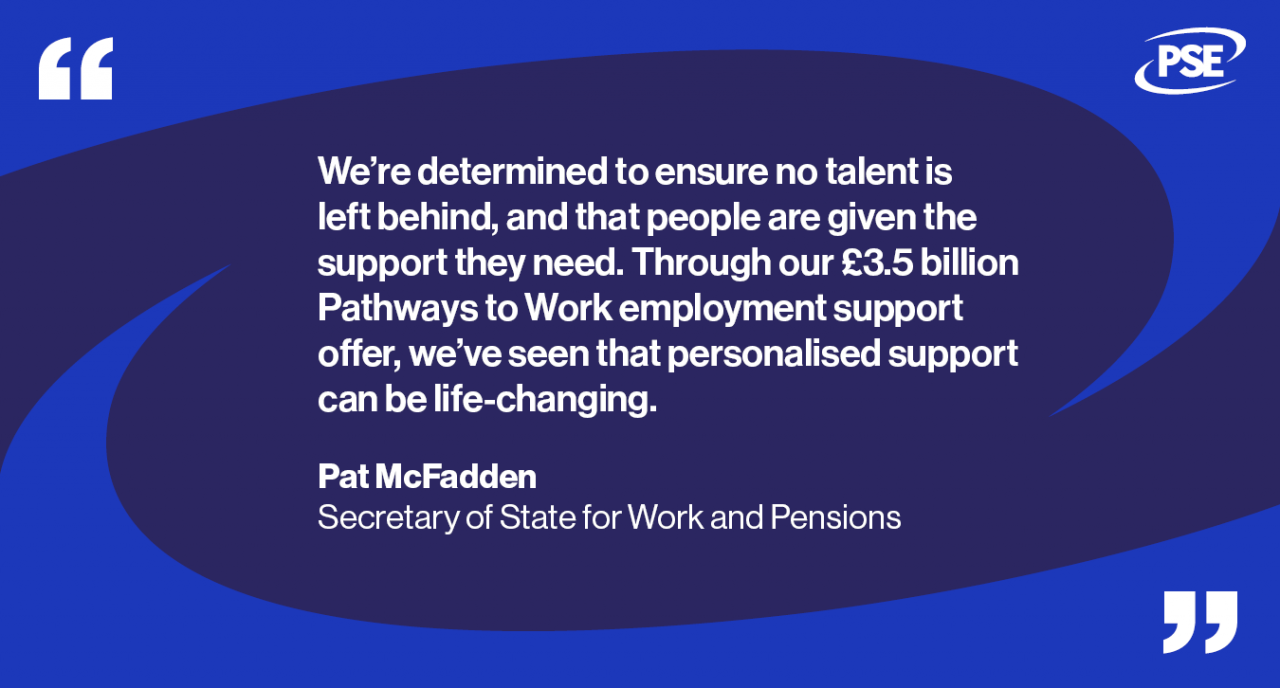
“We’re determined to ensure no talent is left behind, and that people are given the support they need. Through our £3.5 billion Pathways to Work employment support offer, we’ve seen that personalised support can be life-changing.
“Now we’re calling on business, disabled people and charities to work with us, and bring forward their ideas to transform employment support.”
Wider welfare reforms underway
The fund is just one element of a broader reform agenda aimed at modernising the welfare system and improving outcomes for people with health conditions. Key measures include:
- Rebalancing Universal Credit to remove disincentives to work
- Introducing a Right to Try Work Guarantee
- Increasing face-to-face health benefit assessments
- Tackling fraud and error, with projected savings of £14.6 billion over this Parliament
- Ongoing reviews into youth employment barriers and the future of Personal Independence Payment
Technology and joined-up support
The Department for Work and Pensions is also expanding its use of AI and machine learning to improve service delivery, including tools designed to help people find employment more efficiently.
Combined with a more joined-up work and health offer – delivered through local, specialist support – the Government hopes to create a system that meets people “where they are” and responds to individual needs.
Image credit: iStock