

Adults juggling work, childcare and other responsibilities will soon have a new route into higher and further education, following radical reforms to the student finance system designed to make learning more flexible and accessible.
From September 2026, people will, for the first time, be able to access student finance for shorter, flexible, bite‑sized courses, known as “modules”, alongside traditional university degrees.
The government has today confirmed the first 130 universities and colleges approved to offer these smaller courses through the new system. Prospective learners will be able to apply for funding from this September.
The changes form a central part of the Lifelong Learning Entitlement (LLE), introduced in the government’s Post‑16 Education and Skills White Paper last year. Learners can now see where across the country they will be able to use the new funding model.
For decades, higher and further education has largely been built around full‑time degrees taken immediately after school or college. That approach has often failed to reflect the realities of modern working lives – particularly for adults who need to fit study around caring responsibilities or who want to return to education later to retrain or upskill.
By funding smaller courses and modules, the new system allows people to build qualifications gradually over time, rather than committing to a rigid three‑year full‑time degree. Ministers say this flexibility will help remove long‑standing barriers that have previously locked thousands of people out of learning.
The new modular courses will focus on areas critical to tackling national skills shortages, including economics and computing, engineering and architecture, and health and social care.
The reforms also underpin the Prime Minister’s ambition to ensure two thirds of young people are in a gold‑standard apprenticeship, higher training or university by the age of 25. The aim is to close skills gaps, reduce the number of young people not in education, employment or training, and support economic growth as part of the government’s wider programme of national renewal.
Jacqui Smith, Skills Minister, said:
“Financial support should be available whether you want to do a degree, take a short course, or retrain later in life. Our changes will make that happen, with the option to access student finance in any stage of life.
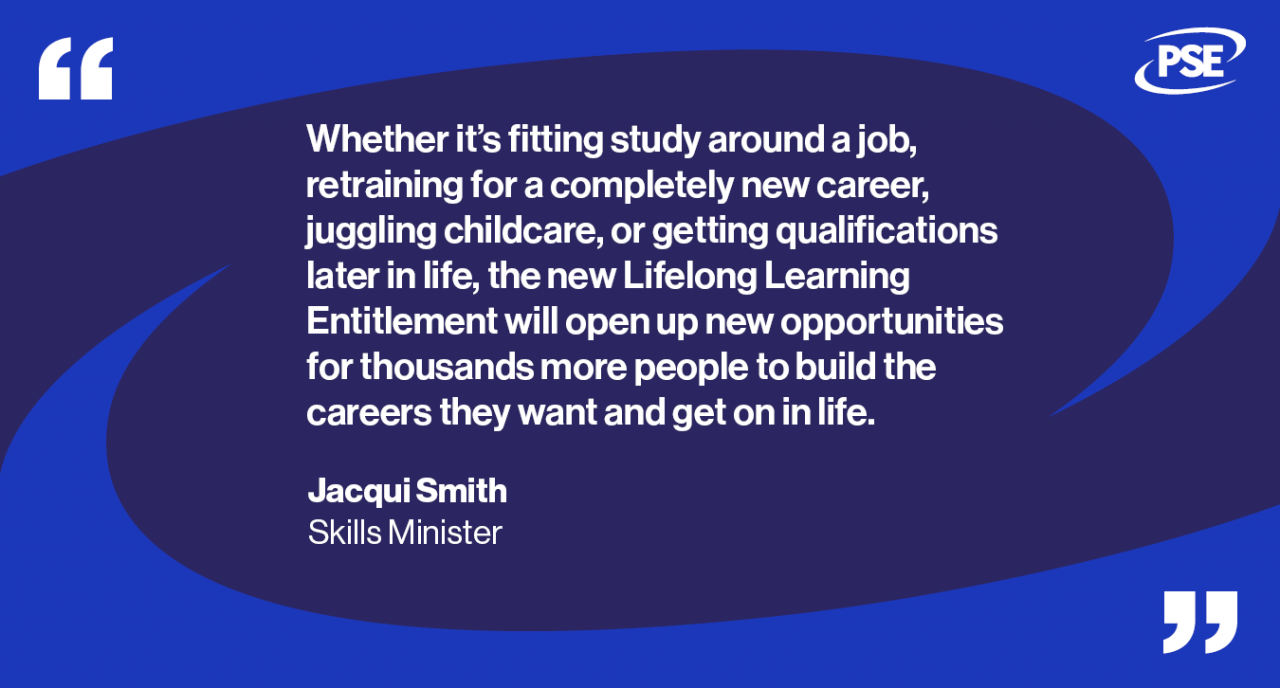
“Whether it’s fitting study around a job, retraining for a completely new career, juggling childcare, or getting qualifications later in life, the new Lifelong Learning Entitlement will open up new opportunities for thousands more people to build the careers they want and get on in life.”
Applications for student finance under the new system will open in September 2026 for learners starting courses or modules from January 2027.
Under the Lifelong Learning Entitlement, individuals will be able to access funding equivalent to four years of post‑18 study, currently worth up to £39,160. This funding can be used flexibly across modules, shorter courses or full degrees over the course of a working lifetime.
Eligible students will also be able to apply for maintenance support to help with living costs. Funding will be provided in smaller amounts, linked to the size of each course, rather than being tied solely to full academic years.
Importantly, people who already hold a degree may still be able to access the new funding, either if they have remaining student finance available or if they are retraining in priority subject areas identified by the government.
Image credit: iStock