

Hundreds of thousands of sick and disabled people will be offered voluntary help into work under new Universal Credit reforms coming into force today, as the government unveils a package of measures designed to improve employment outcomes while saving taxpayers around £1 billion.
The changes aim to reverse a system inherited from the previous government that, according to ministers, too often encouraged people to remain on benefits without meaningful support to move closer to employment.
Under the new rules, new Universal Credit claimants with a health condition will receive a lower health element rate of £217.26 per month, compared with the previous higher rate of £429.80. The reform is designed to address what the government describes as perverse financial incentives that discouraged work where appropriate.
Crucially, protections remain in place for the most vulnerable. People with the most severe and lifelong conditions, those nearing the end of life, and all existing Universal Credit health claimants will continue to receive the higher rate, ensuring no one already reliant on the support is worse off.
Anyone affected by the changes to Universal Credit will be entitled to voluntary employment support. Since March 2025, more than 65,000 people assessed as having limited capability for work and work‑related activity have already taken up the offer of support, exceeding the government’s initial target.
From today (8th April), eligible claimants will also receive a new notification in their Universal Credit online account, clearly setting out the support available. Individuals can opt in to be contacted, triggering a conversation with a Pathways to Work adviser.
Advisers will offer personalised appointments and referrals to programmes such as Connect to Work, WorkWell, or local Trailblazer schemes, tailored to individual circumstances and goals.
Alongside the employment reforms, the government has confirmed that almost four million households on the standard rate of Universal Credit will receive a financial boost worth around £295 this year in cash terms.
For a single person aged 25 or over, this represents around £110 above inflation, supporting living standards as the government continues efforts to reduce cost-of-living pressures.
Minister for Social Security and Disability, Sir Stephen Timms, said:
“The welfare system we inherited has, for too long, locked disabled people and people with long-term conditions out of work.
“Laws coming into force today will change that, reducing projected expenditure on Universal Credit by almost £1 billion.
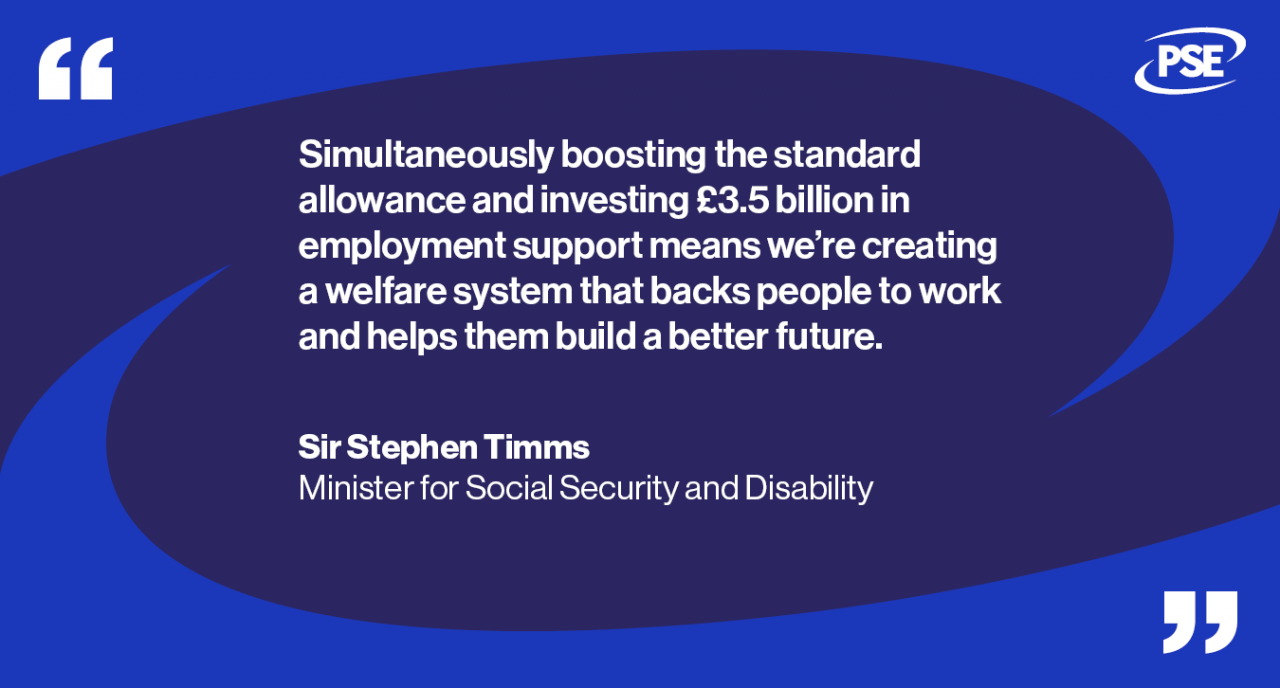
“Simultaneously boosting the standard allowance and investing £3.5 billion in employment support means we’re creating a welfare system that backs people to work and helps them build a better future.”
The reforms are part of a wider £3.5 billion investment aimed at helping disabled people and those with long‑term health conditions move closer to the labour market through personalised employment support.
Key programmes include:
- Connect to Work, providing tailored help to 300,000 people over five years
- WorkWell, a new initiative expected to support 250,000 people to stay in or return to work
Together, these initiatives seek to improve both employment prospects and living standards, while recognising that not everyone will be able to work immediately – or at all.
There are currently 2.7 million people on Universal Credit assessed as having limited capability for work or work‑related activity. The government says the new approach is about removing barriers and opening up opportunities, rather than leaving people parked on benefits without help.
Image credit: iStock