

Children in care will receive stronger support to maintain relationships with their brothers and sisters under new government measures, marking a major shift in how local authorities safeguard family bonds for vulnerable young people.
The government has brought forward legislation requiring all local authorities in England and Wales to promote and facilitate sibling contact when children in care are separated from their brothers or sisters. The change places sibling relationships on an equal footing with parental contact, recognising their critical role in providing emotional stability, continuity and lifelong support.
The amendment to the Children’s Wellbeing and Schools Bill was welcomed in the House of Lords on Wednesday 25 March, following sustained engagement with sector experts and parliamentarians. Final approval is expected after further debate in the House of Commons following Easter.
For too many care‑experienced children, entering the care system can mean losing regular contact with their siblings, including step‑siblings and half‑siblings. Campaigners have long highlighted the long‑term emotional impact of such separation, especially when sibling bonds have provided security and consistency during childhood upheaval.
Under the new measures, local authorities must now do everything they reasonably can to support and sustain sibling relationships, even when children are placed far apart. Contact will only be restricted where it is clearly not in a child’s best interests, for example, in cases involving violence, abuse or serious safeguarding concerns.
The reform is one element of the government’s wider programme to ensure children in care can grow up in stable, loving environments.
This includes:
- Reducing care placements far from home, allowing children to stay closer to their families and communities
- £10.8 million to expand Regional Care Co‑operatives, improving placement planning and capacity
- Ambitious plans for 10,000 more foster care placements, supported by £88 million, including
- £2.4 billion for the Families First Partnership Programme to support early intervention and help families stay together
- A pilot offering financial support for kinship carers
- Enhanced support for adoptive families
Leaders say these reforms are essential to making sure children in the care system have every chance to thrive.
The sibling contact amendment sits within the government’s landmark Children’s Wellbeing and Schools Bill, described as the most transformative piece of child protection legislation in a generation.
The Bill aims to reshape education and social care systems so children’s needs, rights and relationships are placed firmly at the centre of policy and practice.
Josh MacAllister, Children’s Minister, said:
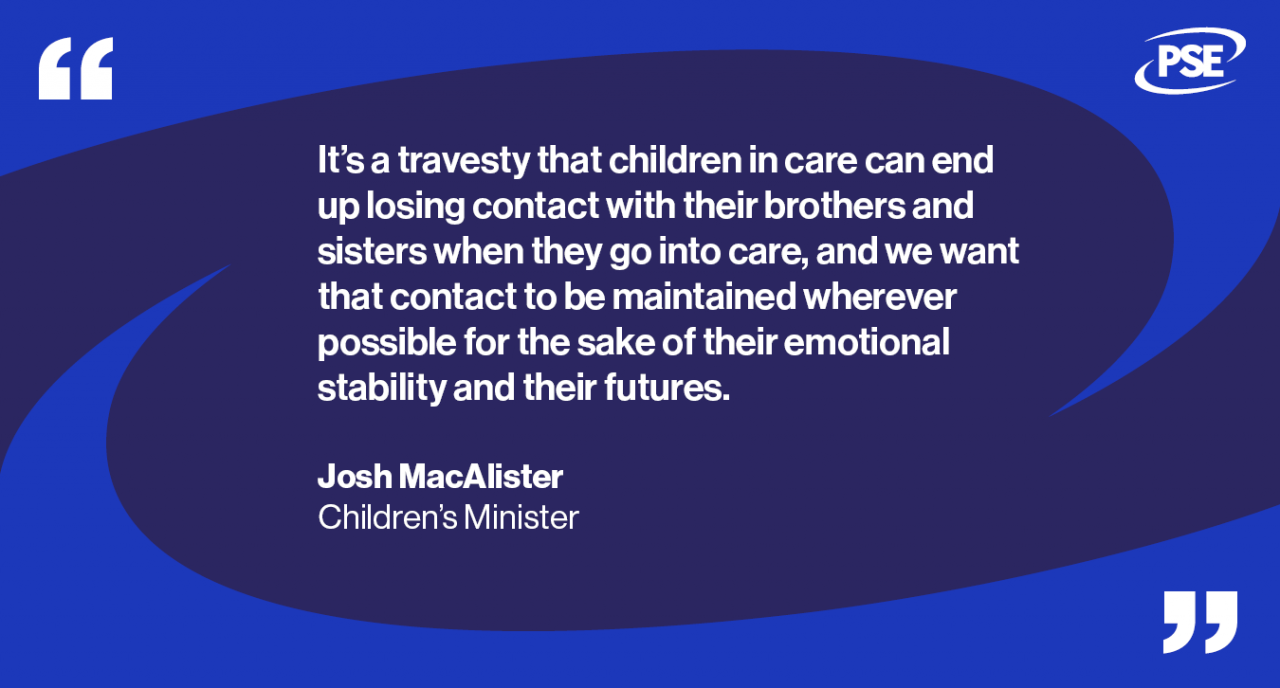
“It’s a travesty that children in care can end up losing contact with their brothers and sisters when they go into care, and we want that contact to be maintained wherever possible for the sake of their emotional stability and their futures.
“Every child’s circumstances are different, but this amendment is aimed at making life better for more vulnerable children and giving them the best possible start in life.”
The government has committed to working closely with children’s services, social workers, foster carers and the wider sector to support implementation of the new duty. Guidance and best practice will be shared nationally to ensure children everywhere benefit from more stable, relationship‑centred care arrangements.
Image credit: iStock