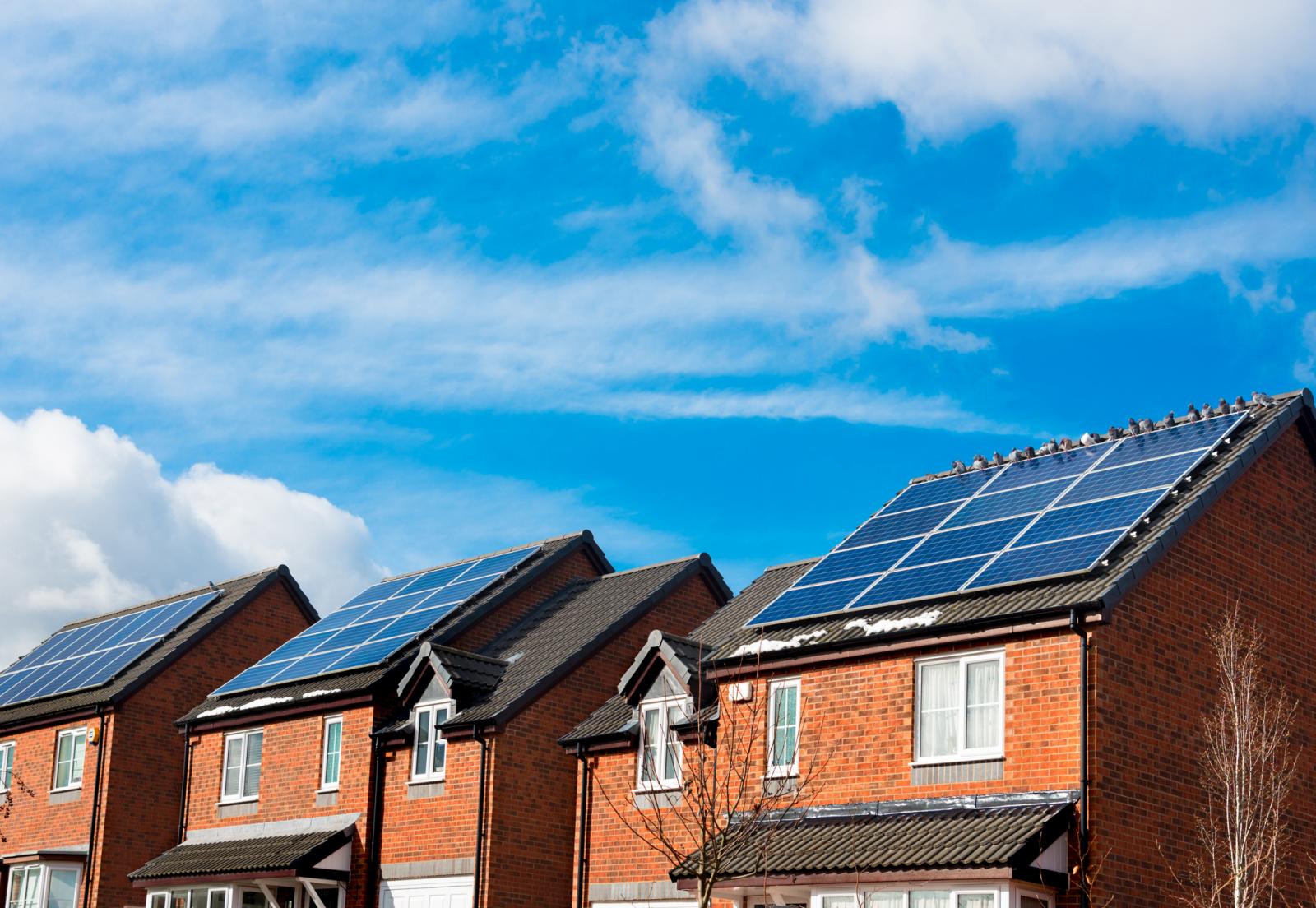

Households and businesses across the UK are rapidly scaling up their use of solar energy, as new figures reveal a record-breaking surge in installations – fuelled by rising energy costs and concerns over global instability in fossil fuel markets.
Government data published this week confirms that 2025 was the strongest year on record for solar deployment, with 269,000 installations completed nationwide. Of these, around 255,000 were rooftop systems, meaning more than 95% were installed on homes, commercial premises, and public buildings.
The figures highlight the pace of adoption, equating to a new rooftop solar installation every two minutes throughout the year – a clear sign that households are increasingly taking energy generation into their own hands.
Momentum continues into 2026
The momentum has carried into 2026, with April figures showing nearly 23,000 additional installations in a single month, more than half of which were on domestic properties. Notably, nine of the ten strongest months ever recorded for solar uptake have occurred within the past year.
This growth builds on a major milestone reached in March 2026, when the UK surpassed two million total solar installations for the first time – spanning homes, communities, and large-scale solar farms.
At the same time, falling costs are helping to accelerate adoption. New government data shows that the cost of installing solar photovoltaic (PV) systems has dropped by up to 9%, making the technology more accessible to households and organisations alike.
Clean energy push amid global uncertainty
The expansion comes against the backdrop of heightened geopolitical tensions and continued volatility in global energy markets. Ministers have pointed to the war in Iran as a stark reminder of the UK’s exposure to fossil fuel shocks – driving renewed urgency behind the transition to domestic, renewable energy sources.
Energy Secretary Ed Miliband said:
“As we face a second fossil fuel crisis in 5 years, Britain is taking back control of their energy by generating more clean power than ever before. Record-breaking solar growth means greater energy security, lower exposure to volatile fossil fuel markets which we can’t control.
“This is what our clean power mission looks like: backing homegrown energy, giving people more control over their bills, and building a stronger, more resilient energy system for the future.”
Policy measures and innovations supporting growth
The government has been actively supporting solar expansion through a range of policies and initiatives aimed at reducing costs and increasing accessibility. These include:
- Approval of major infrastructure, such as Springwell Solar Farm—set to become the largest power-producing solar site in UK history
- New ‘plug-in’ solar panels, expected to hit the market within months, allowing households to install low-cost panels on balconies and outdoor spaces
- Future housing standards, ensuring solar panels are installed as standard on new homes in England
These efforts are designed not only to boost clean energy generation but also to help households manage rising energy bills. Government estimates suggest rooftop solar could save families up to £480 per month, depending on usage and system size.
Public sector and industry adoption growing
Beyond households, uptake across businesses and public services is gathering pace – offering both cost savings and improved energy resilience.
- Numatic International, manufacturer of the iconic Henry vacuum cleaner, has launched a solar park expected to supply around 20% of its Somerset factory’s electricity demand
- Mid Cheshire Hospitals NHS Foundation Trust has installed rooftop panels projected to save approximately £9,500 annually
- Wren Kitchens is developing what is set to become the largest factory rooftop solar array in the UK
Meanwhile, the government’s Great British Energy solar scheme continues to expand, with a further 100 schools and colleges set to benefit from rooftop installations this year.
What this means for public sector leaders
For local authorities, NHS organisations and other public sector bodies, the surge in solar adoption presents both a policy opportunity and a financial imperative. With energy costs remaining a major pressure, investment in on-site generation is increasingly seen as a practical route to long-term savings and carbon reduction.
The rapid expansion of solar infrastructure also signals a broader shift in how energy is produced and consumed in the UK – with decentralised, locally generated power playing a much larger role in future resilience.
Image credit: iStock