

The UK and Japan are set to deepen their economic partnership with a series of major investment agreements expected to generate tens of thousands of jobs and deliver more than £18 billion in economic benefits. The package focuses on key growth sectors including technology, clean energy, infrastructure, and life sciences – industries that are central to the UK’s Modern Industrial Strategy.
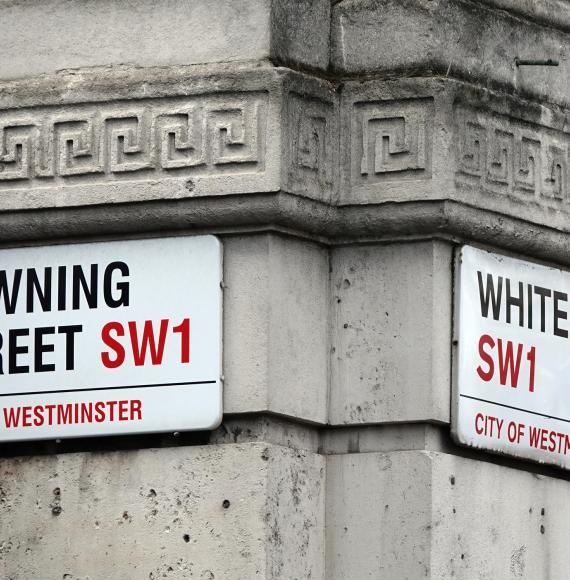
The agreements come as the Prime Minister prepares to host his Japanese counterpart, Sanae Takaichi, at Downing Street ahead of the G7 summit in Évian-les-Bains. The visit is expected to culminate in over ten commercial and government deals, following a roundtable involving senior business leaders from both countries.
Together, the agreements signal strong international confidence in the UK’s economic outlook, with Japanese investors outlining a five-year pipeline worth more than £9 billion. This investment is set to support the development of new towns, office space, and innovation hubs across the country.
Prime Minister Keir Starmer said:
“These landmark agreements will bring multibillion pound investment into the UK, creating tens of thousands of new jobs and driving new developments.
“As G7 economies and close security partners, we are working together with Japan on some of the most innovative technology in the world, harnessing the best of British and Japanese research and industry to deliver growth and security to every corner of the United Kingdom.”
With the existing UK–Japan economic relationship already valued at £140 billion, the latest deals are expected to further strengthen ties across trade, innovation, and security.
A major highlight of the visit is the proposed Offshore Wind Compact, developed in partnership with Great British Energy. The initiative aims to unlock up to £9 billion in Japanese investment into the UK’s offshore wind sector.
Projects under the compact are expected to deliver 5.9GW of floating offshore wind capacity, including developments such as Ossian and Green Volt off Scotland’s east coast, and Erebus in the Celtic Sea. Once operational, these projects could generate enough electricity to power around eight million homes.
For public sector leaders, the implications are significant – boosting domestic energy generation while reducing reliance on volatile fossil fuel markets, supporting long-term energy security, and contributing to cost stability.
The economic benefits will be felt across the UK. Hitachi Energy UK has announced plans to create at least 500 jobs over the next five years, including 100 highly skilled roles at its new Glasgow Centre of Excellence. The company is also investing more than £18 million in a new facility in Stafford to support grid expansion.
Meanwhile, life sciences investment is set to benefit communities such as Hatfield, where Japanese firm Eisai will invest £48 million in a new packaging facility for dementia treatments, supported by government funding.
Collaboration in advanced energy technologies is also expanding. Rolls-Royce will work more closely with Japan’s Atomic Energy Agency through a new agreement with the UK National Nuclear Laboratory to develop next-generation nuclear solutions. Partnerships between UKAEA and Japan’s QST will further strengthen joint efforts in fusion energy.
In parallel, a new UK–Japan Frontier Tech Partnership (FTP) will accelerate collaboration in areas such as artificial intelligence, quantum computing, civil nuclear and defence technologies. The initiative aims to turn British research into scalable innovations backed by Japanese investment.
Notably, UK-based ORCA Computing has secured a landmark export deal, which is one of the first instances globally of a major corporation purchasing a quantum computer.
The visit is also expected to formalise a partnership between the UK Semiconductor Centre and Japan’s Rapidus manufacturing facility. This will create a direct route for the UK to produce advanced semiconductor chips essential for modern technologies, from mobile devices to vehicles.
Defence cooperation is also on the agenda, with both governments reaffirming their commitment to the Global Combat Air Programme. A new Defence Capability and Industrial Council will be established to boost collaboration in dual-use technologies such as drones and artificial intelligence, while opening up access to Japanese investment for UK defence firms.
For professionals across the UK public sector, from regional economic planners to infrastructure and energy leaders, this deal represents a significant opportunity:
- Regional regeneration: Investment in new towns, infrastructure, and life sciences facilities
- Net zero delivery: Accelerated progress on renewable energy targets
- Innovation ecosystems: Closer integration between research institutions and global investors
- Skills and employment: Thousands of high-value jobs in emerging industries
The UK–Japan partnership is evolving beyond trade into a strategic alliance, shaping the future of energy, technology, and national resilience.
Image credit: iStock