


The Local Government Association has warned that councils should not be used to administer the Government’s proposed High Value Council Tax Surcharge (HVCTS), arguing it could prove costly to local authorities, confusing for residents and damaging to local accountability.
The HVCTS would introduce a new national levy on residential properties valued at more than £2 million. Although the surcharge would be set entirely by central government, councils would be expected to bill homeowners, collect payments, and enforce compliance.
Under the proposals, local authorities would also be responsible for identifying liable property owners, administering deferred payment arrangements, handling appeals and carrying out debt recovery action, including against overseas property owners. Despite carrying out these duties, councils would not retain any of the revenue generated, with funds instead returned to central government.
LGA Raises Concerns Over Cost and Complexity
In its response to the Government’s consultation, the LGA said the plans would create “a complex, costly and inefficient parallel system” alongside the existing council tax framework.
The association warned that councils could face significant new staffing, legal and technology costs while taking on responsibilities over which they have little or no control. It also highlighted the risk that local authorities could be left out of pocket if the Government fails to fully reimburse the costs associated with implementing and operating the scheme.
While ministers have suggested that revenue generated through the surcharge will help support local government services, the LGA says there remains a lack of clarity over how that funding would be distributed and whether it would represent genuinely new investment rather than replacing existing allocations.
Accountability and Enforcement Challenges
The LGA’s consultation response highlights several concerns surrounding the practical operation of the surcharge.
Firstly, it warns that branding the levy as a form of council tax could create confusion among residents, who may wrongly hold local councillors responsible for decisions on rates, exemptions and eligibility that would be determined entirely by central government.
Secondly, the organisation says identifying and enforcing payment from non-resident and overseas property owners could prove highly resource-intensive, particularly given uncertainty over the legal powers available to councils.
The association also points out that the administrative burden could be disproportionate in areas containing only a small number of high-value properties, where councils would still be expected to establish systems and processes for relatively limited returns.
Call for National Administration
The LGA is urging the Government to explore options for administering the surcharge through a nationally managed system rather than passing responsibility to councils.
If local authorities are ultimately required to manage the levy, the association says council tax bills and related communications must clearly explain that the surcharge is a national charge and not a locally determined tax.
The organisation is also calling for upfront funding to help councils prepare for implementation once draft property lists are published, alongside a guarantee that all administrative, legal and enforcement costs will be fully covered.
Cllr Kam Rai, Chair of the LGA’s Resources Committee, said:
“The surcharge is a national tax, yet councils would be left to administer it, carry the risk, and deal with the confusion it will create for residents.
“Without full funding for implementation costs and clear accountability, this proposal risks adding cost and complexity at a time when councils are already under enormous pressure.
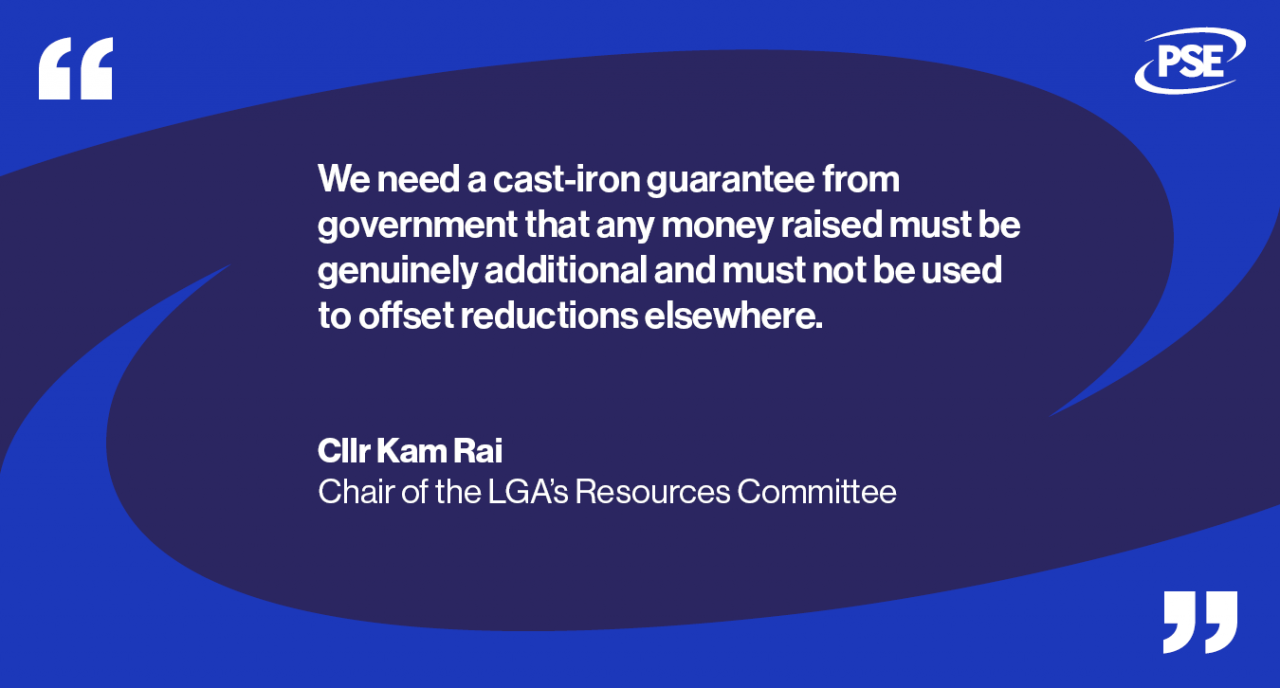
“We need a cast-iron guarantee from government that any money raised must be genuinely additional and must not be used to offset reductions elsewhere.
“Councils should not be expected to run a new national tax system that could leave them out of pocket and undermine local democratic accountability.”
The debate over the proposed High Value Council Tax Surcharge is likely to intensify as councils seek clarity over funding arrangements, operational responsibilities, and the potential impact on local government finances.
Image credit: iStock