

Scotland’s Deputy First Minister Kate Forbes has announced a comprehensive package of measures to address long‑term unemployment, stimulate economic growth and reduce child poverty across Scotland.
The plans, included in the 2026‑27 draft Scottish Budget, provide £90 million to support people furthest from the labour market into work, with up to 7,500 individuals expected to benefit directly, and thousands more accessing qualifications, training and employability support.
The funding will underpin a series of targeted initiatives designed to remove structural barriers to employment and help people secure long‑term, sustainable jobs. Key elements include:
- £40 million package to support parents most at risk of poverty into training and employment.
- £5 million investment in specialist services to help disabled people access and retain meaningful work.
- £39 million for the No One Left Behind programme, which supports people furthest from the labour market on the journey towards employment.
These interventions form part of the Scottish Government’s wider commitment to creating a fairer, more inclusive labour market.
The Deputy First Minister also announced a major new nationwide marketing campaign offering parents practical advice and guidance on returning to work. The campaign will highlight the support available through employability services, local authorities and training partners.
Announcing the new programme during a visit to a business that providers on-site training as part of the No One Left Behind approach, the Deputy First Minister said:
"Our employability services are helping people into work who may otherwise face barriers to employment due to factors such as illness, disability or simply taking time out to have a family. With the involvement of employers like McTaggart Construction, we are building people’s confidence and providing access to new skills.
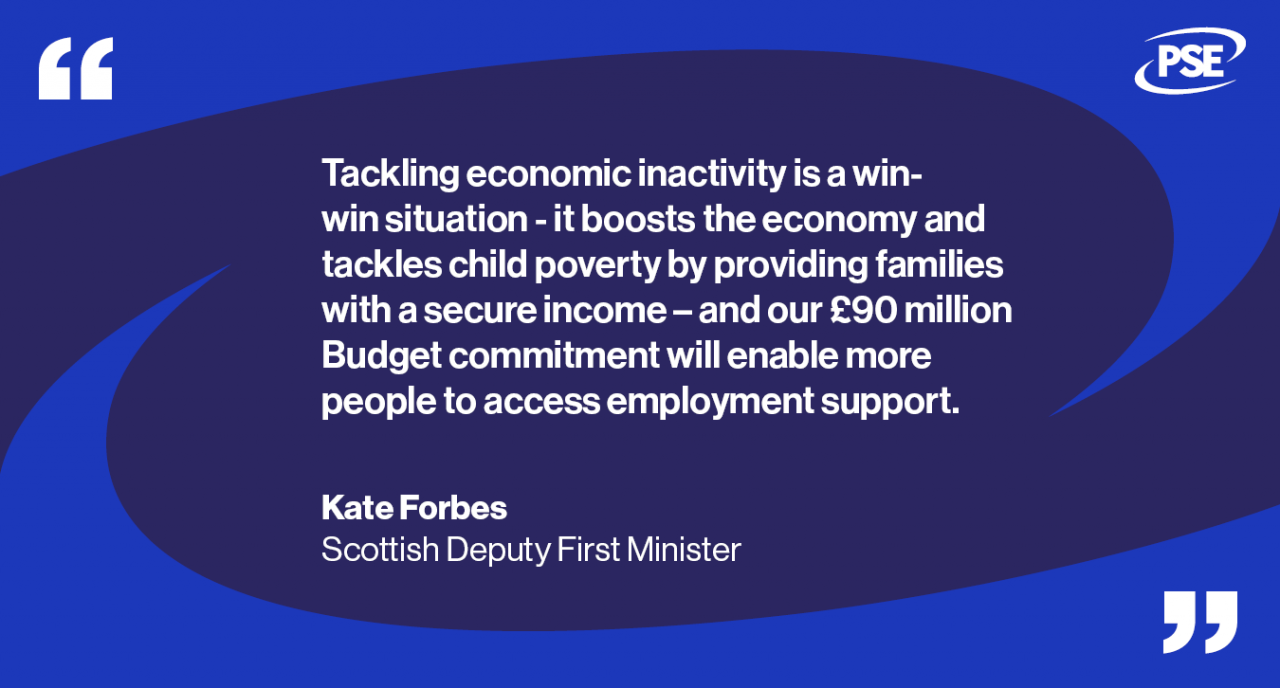
“Tackling economic inactivity is a win-win situation - it boosts the economy and tackles child poverty by providing families with a secure income – and our £90 million Budget commitment will enable more people to access employment support.”
Between April 2019 and June 2025, Scotland’s employability services have delivered significant results that include 28,699 people supported into jobs, 13,222 helped into further education or training, and 17,513 people gaining a qualification.
These achievements form the foundation of the expanded 2026‑27 programme.
According to the Office for National Statistics Labour Force Survey, the estimated unemployment rate for people aged 16 and over in Scotland was 3.7% from September to November 2025. This compares favourably with the UK‑wide unemployment rate of 5.1% over the same period.
By combining targeted investment, tailored support and a focus on skills, the Scottish Government aims to create pathways into work for thousands of people and strengthen Scotland’s long‑term economic resilience.
Image credit: iStock