


The Local Government Association is calling on the Government and the Sentencing Council to urgently review fly‑tipping sentencing guidelines, after new analysis shows that offenders prosecuted through the courts are routinely fined less than the penalties councils can issue directly.
According to the latest national data, the average court fine for fly‑tipping is £539 - £87 lower than the £626 average Fixed Penalty Notice available to local authorities. The LGA warns that this “sentencing gap” undermines deterrence, weakens enforcement, and leaves councils out of pocket despite the significant time and cost involved in bringing cases to court.
Fly‑tipping remains a major and costly challenge for councils across England. In 2024/25, local authorities recorded 1.26 million incidents, with clearance costs exceeding £19.3 million. Many councils have increased their enforcement activity, but the LGA says inconsistent and often low court fines risk sending “the wrong signal” to offenders.
Taking cases to court requires lengthy investigations, high evidential thresholds, and significant staff time and resource. Despite this, sentencing outcomes often fail to reflect the seriousness of the offence or the financial and environmental damage caused.
The LGA highlights multiple recent cases where magistrates have imposed fines significantly lower than the original FPNs:
- York: Two offenders fined £300 each, despite receiving FPNs of £600 and £1,000
- Wiltshire: An offender who ignored a £1,000 FPN was fined just £80 in court
- Chelmsford: Two offenders prosecuted for fly‑tipping were fined £300 each, lower than the £400 FPNs originally issued
The LGA argues that current sentencing guidelines are out of step with the true cost and community impact of fly‑tipping.
Cllr Arooj Shah, Chair of the LGA’s Neighbourhoods Committee, commented:
“Fly-tipping is criminal activity that blights communities and costs taxpayers millions of pounds every year.
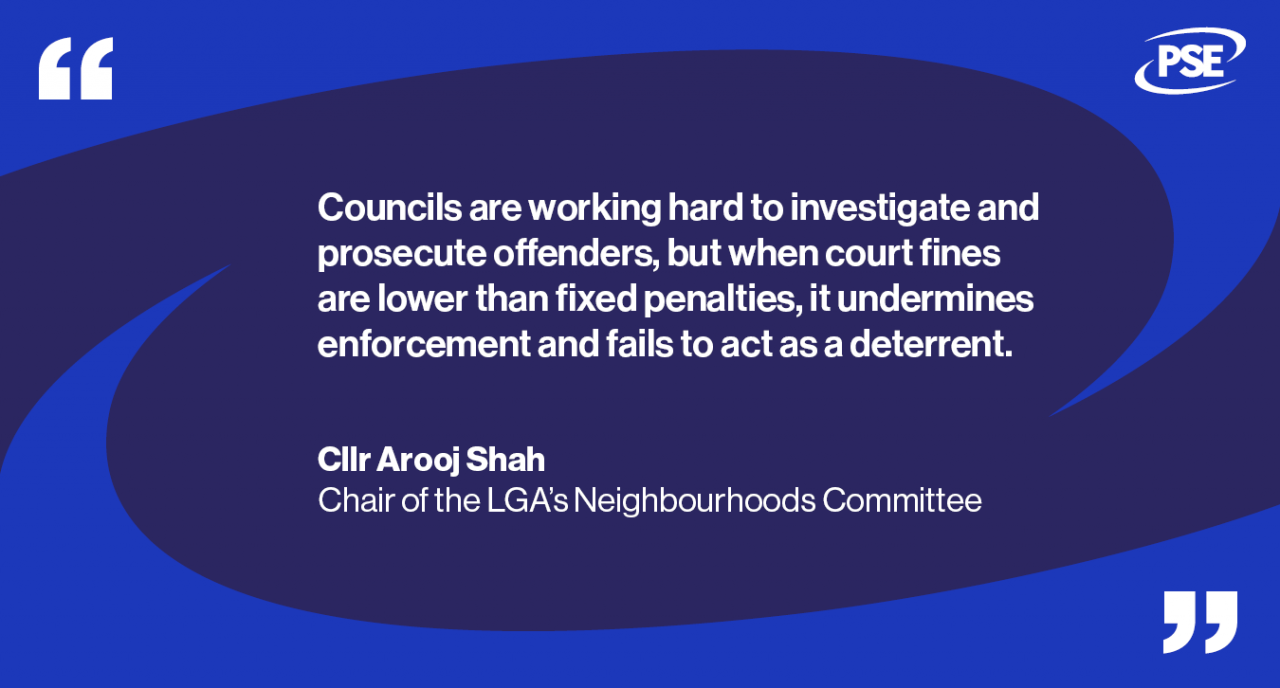
“Councils are working hard to investigate and prosecute offenders, but when court fines are lower than fixed penalties, it undermines enforcement and fails to act as a deterrent.
“Sentencing guidelines must be reviewed so that the punishment fits the crime and reflects both the harm caused and the significant work undertaken by enforcement officers.”
The Association is urging the Government and the Sentencing Council to strengthen penalties to ensure they reflect:
- The environmental damage caused
- The burden on local taxpayers
- The impact on communities and local pride
- The scale of organised or repeat offending
The LGA says tougher penalties would also support the Government’s ambition to improve pride in place, protect local spaces, and reinforce councils’ efforts to make neighbourhoods cleaner and safer.
With budgets already stretched, councils say they cannot continue absorbing the financial impact of fly‑tipping while fines issued by the courts fail to cover even a fraction of the costs involved in enforcement. The LGA is calling for a fairer, more consistent sentencing regime that gives councils confidence that prosecutions will deliver meaningful deterrence.
Image credit: iStock