

The UK government is moving to strengthen its grip on local authority finances, announcing new powers designed to identify financial risks earlier and prevent councils from falling into unsustainable debt.
The measures will allow central government to monitor every council’s investments, borrowing levels and revenue streams more closely. The aim is to detect warning signs sooner - enabling intervention before financial pressures escalate into full-blown crises that could leave taxpayers exposed.
The proposals come in response to high-profile failures in recent years, where some councils pursued aggressive borrowing strategies to fund commercial investments. These decisions have, in several cases, resulted in significant financial strain.
Woking Borough Council, for example, accumulated more than £2 billion in debt - almost 100 times its annual budget - while Thurrock Council ran up £1.5 billion in borrowing linked to unsuccessful investment ventures. Both authorities have since taken steps to rein in their financial positions, but the scale of their challenges has amplified concerns across the sector.
New framework for early risk detection
The government’s new approach centres on enhanced financial metrics that will track councils’ exposure to risk in real time. By analysing patterns in borrowing, investment behaviour and income generation, officials aim to identify vulnerabilities much earlier than is currently possible.
A consultation launched alongside the announcement will examine how these powers will operate in practice, including what additional tools may be needed to strengthen oversight further.
Key objectives include:
- Improving transparency across local government finances
- Ensuring borrowing remains affordable and sustainable
- Providing early intervention mechanisms to protect public funds
The reforms are expected to form part of a broader push to rebuild financial resilience across local authorities, many of which continue to feel the aftershocks of pandemic spending pressures and rising demand for services.
Local Government Minister Alison McGovern underlined the importance of acting before financial problems spiral out of control:
“In Woking, Thurrock, and other councils we’ve seen poor investment decisions leaving taxpayers footing a big bill.
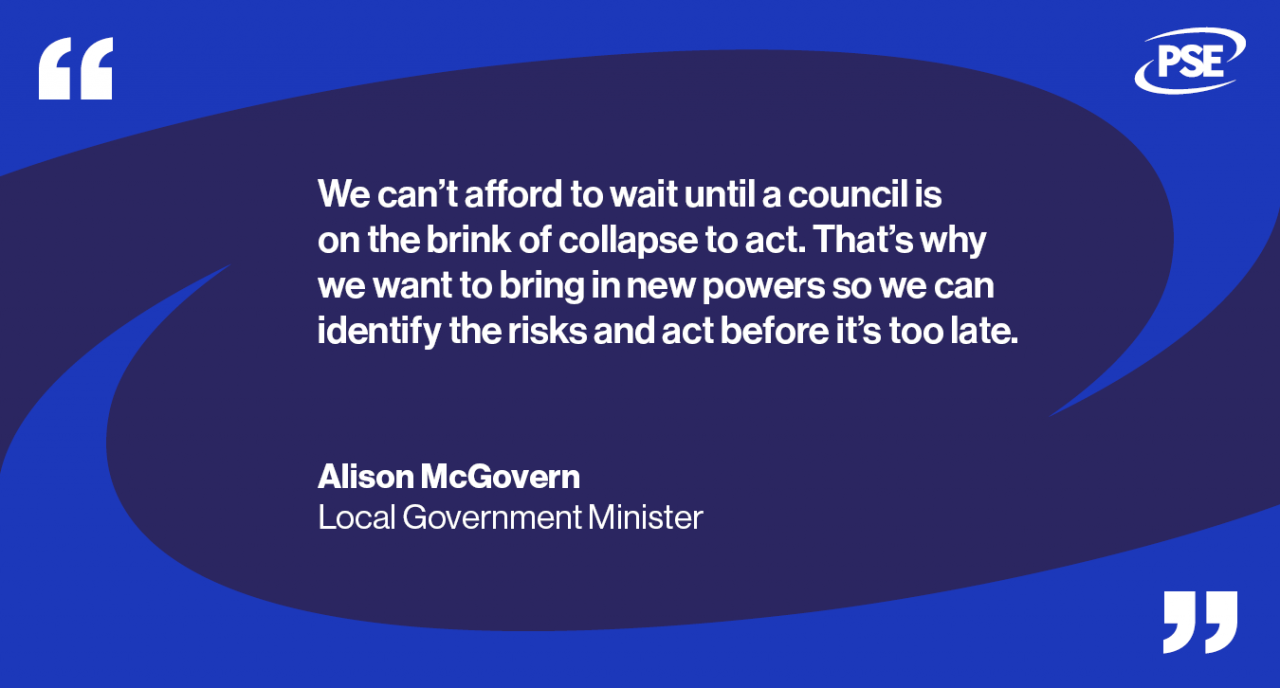
“We can’t afford to wait until a council is on the brink of collapse to act. That’s why we want to bring in new powers so we can identify the risks and act before it’s too late.
“This is alongside making £78 billion available through the Fair Funding Review to get councils back on their feet through the first multi-year settlement in a decade.”
The £78 billion funding commitment, tied to the ongoing Fair Funding Review, is intended to provide greater stability through a multi-year financial settlement—the first of its kind in ten years.
Sector implications
For finance leaders and senior managers across local government, these proposals signal a shift towards more proactive scrutiny and accountability. While the intention is to safeguard public money, the introduction of tighter controls may also influence councils’ appetite for commercial investment and borrowing-led growth strategies.
The consultation phase will be closely watched, as it will shape how intrusive or flexible the new oversight framework becomes – and how councils balance financial innovation with prudence in the years ahead.
Image credit: iStock