

Millions of people across the UK could benefit from stronger, safer and more connected communities as the government unveils a major new action plan to tackle extremism, hate crime and social division.
The publication, titled Protecting What Matters, sets out the first steps in a renewed national effort to build a more cohesive, resilient and unified United Kingdom – one where people feel a shared sense of values, belonging and pride.
The strategy comes amid long‑term social pressures including technological change, shifting demographics, the decline of local industries and vital services, and the continuing cost‑of‑living crisis. These factors, the government says, have placed strain on social cohesion.
At the same time, malign actors – both domestic and international – have increasingly attempted to inflame community tensions, promote extremist ideologies and undermine national unity.
Protecting What Matters aims to confront these challenges directly by setting clear expectations for integration and shared values, tackling harmful ideologies and those who seek to exploit community divisions, as well as rebuilding trust and confidence between communities. Alongside these measures, the strategy will promote unity and collective pride in local and national identity.
The government highlights rising hate crime levels, with new figures showing that:
- Jewish communities are disproportionately targeted, more than any other group
- Religious hate crime against Muslims is at a record high, with almost half of recorded incidents directed at Muslim individuals
To improve protection for affected communities, the government is:
- Scaling up security at synagogues, Jewish schools and community institutions
- Cracking down on antisemitic extremism
- Expanding workplace training to help employers identify and tackle antisemitism
For the first time, the government will adopt a non‑statutory definition of anti‑Muslim hostility. This will establish a clear distinction between legitimate free speech and harmful prejudice, whilst also identifying unacceptable discrimination, hatred or harassment towards Muslims (or those perceived to be Muslim) and providing a consistent framework for enforcement and community protection.
A Special Representative for Anti‑Muslim Hostility will be appointed to strengthen national understanding, improve reporting, and support community-led solutions.
Alongside stronger protections for minority communities, the government is introducing a wide range of measures designed to bring people together, improve integration and disrupt extremism:
Tougher action on extremism
- New powers to shut down charities promoting extremist activity
- Enhanced capabilities to disrupt extremist networks
- Stronger border measures, including stopping hate preachers from entering the UK
- An annual State of Extremism report to track trends, risks and threat levels
Clear expectations for integration
People coming to settle in the UK will be expected to demonstrate:
- Shared language (with improved access to English‑language learning)
- Local participation
- Respect for shared national values
The government will also explore how new digital tools could expand access to English language provision, with £500,000 for school linking programmes, helping children from different backgrounds build friendships and shared understanding, and stronger oversight of home education, including the first mandatory national register of children not in school.
Steve Reed, Secretary of State for Housing, Communities and Local Government:
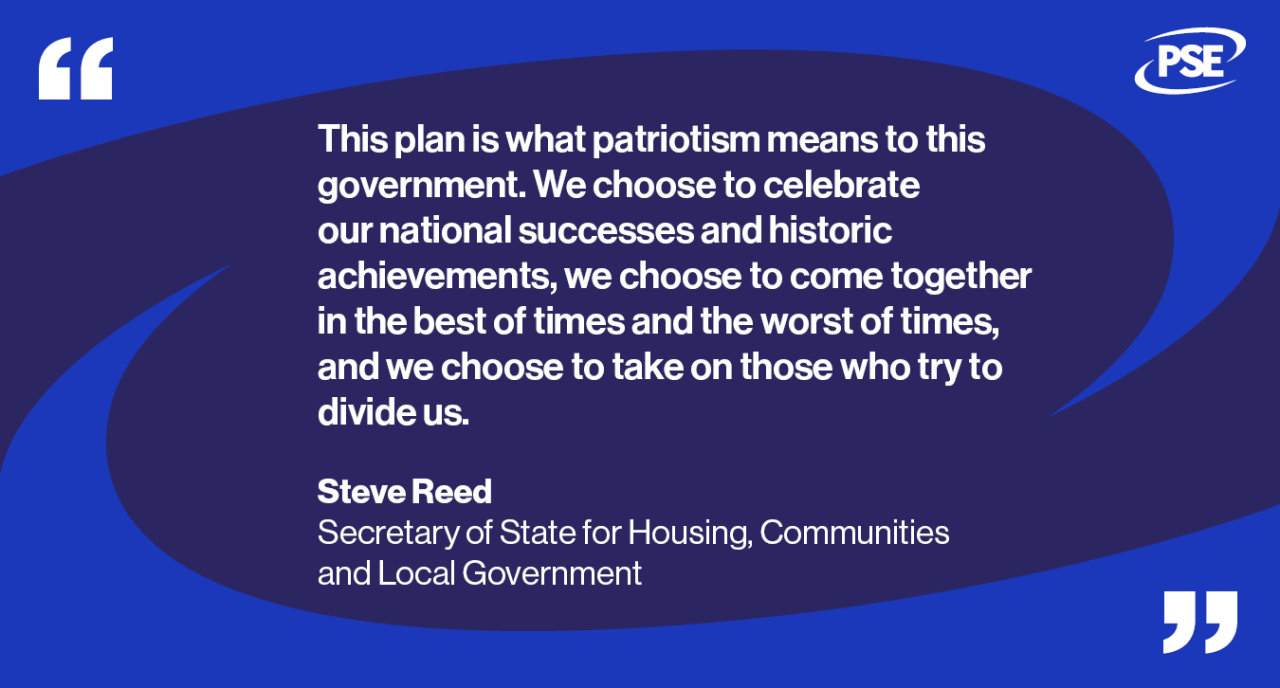
“Today, through the publication of Protecting What Matters, we set out the first steps towards a more confident, cohesive, and resilient United Kingdom. This plan is what patriotism means to this government. We choose to celebrate our national successes and historic achievements, we choose to come together in the best of times and the worst of times, and we choose to take on those who try to divide us.”
These measures complement the £5.8 billion Pride in Place programme, which supports local investment and community‑led regeneration across hundreds of areas, giving residents a greater voice in shaping their neighbourhoods.
Image credit: iStock
Social