

Local leaders across England are a step closer to gaining new powers to raise and retain funding for investment in town and city centres, cultural attractions and visitor infrastructure, following the introduction of the Visitor Levy Bill in the House of Commons.
The proposed legislation would allow directly elected mayors to introduce a levy on overnight accommodation stays, with all funds raised remaining within the local area. The government says the measure is a significant step towards greater fiscal devolution, giving local leaders more control over funding decisions and enabling investment in projects that support both residents and visitors.
Under the plans, revenue generated by a visitor levy could be used to enhance high streets, improve public spaces, maintain public toilets and parks, support cultural events, strengthen security measures and promote destinations to attract more visitors.
The government has stressed that lower-cost family holidays will continue to be protected. Rather than applying a flat-rate charge, the levy would be calculated as a percentage of accommodation costs, ensuring guests staying in lower-priced accommodation pay less. Ten mayors have also pledged that any levy introduced in their areas would not exceed 5%, providing reassurance for both businesses and visitors.
The Bill forms part of the government's wider devolution agenda and follows commitments set out in the Budget to support economic growth across the country, alongside measures aimed at revitalising high streets and transferring greater decision-making powers from Whitehall to local communities.
Secretary of State for Housing, Communities, and Local Government Angela Rayner said:
“Millions of people visit our wonderful towns and cities each year, and it’s right that our communities should be able to feel the benefit of that footfall.
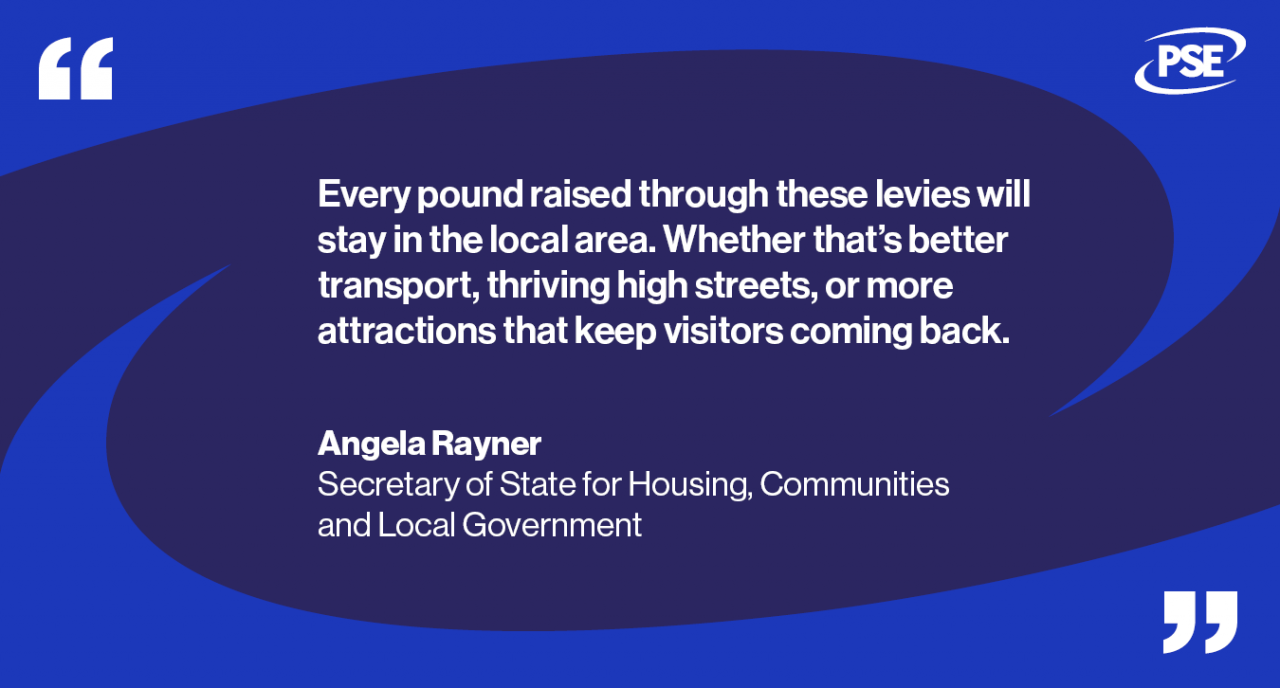
“Every pound raised through these levies will stay in the local area. Whether that’s better transport, thriving high streets, or more attractions that keep visitors coming back.
“This is about giving mayors and local leaders the choice to invest back into what matters most to local people, while protecting lower-cost stays and making sure businesses have their say.”
The proposals have been welcomed by leaders in Greater Manchester, where a visitor charging scheme has already been operating successfully in Manchester city centre.
Bev Craig, Mayor of Greater Manchester said:
“In Greater Manchester, we campaigned for an Overnight Visitor Levy to boost our region and give mayors the powers to raise additional funds through a modest levy on overnight stays. This would give us access to new funding that we can reinvest into our places to support our visitor economy, improve public services and drive good growth.
“In Manchester we pioneered a similar scheme in recent years which has been a resounding success. Our industry-led City Visitor Charge has shown that the model can work, generating millions of pounds that has been invested back into things like street cleaning and our work to attract major events, with widespread support from the hospitality sector.
“The Overnight Visitor Levy also represents a major moment for devolution and a further vote of confidence in the ability of mayors and local leaders to make decisions in the best interests of their places. It means we can attract more events, make our region more welcoming for tourists with cleaner streets and invest in long term projects like extending the tram network.
“The important thing now is that this is genuinely devolved. Any levy needs to work for our city region and be shaped with our councils, businesses and the local hospitality sector, with the money raised here being used for the benefit of people and businesses in Greater Manchester.”
If approved by Parliament, the Visitor Levy Bill could create a new funding stream for mayoral combined authorities, giving local leaders greater flexibility to invest in tourism-related infrastructure and services without relying solely on central government funding.
Supporters argue the measure will help destinations reinvest in the facilities that both visitors and residents rely on, while critics are likely to scrutinise the potential impact on hospitality businesses and visitor numbers as the legislation progresses through Parliament.
Image credit: iStock