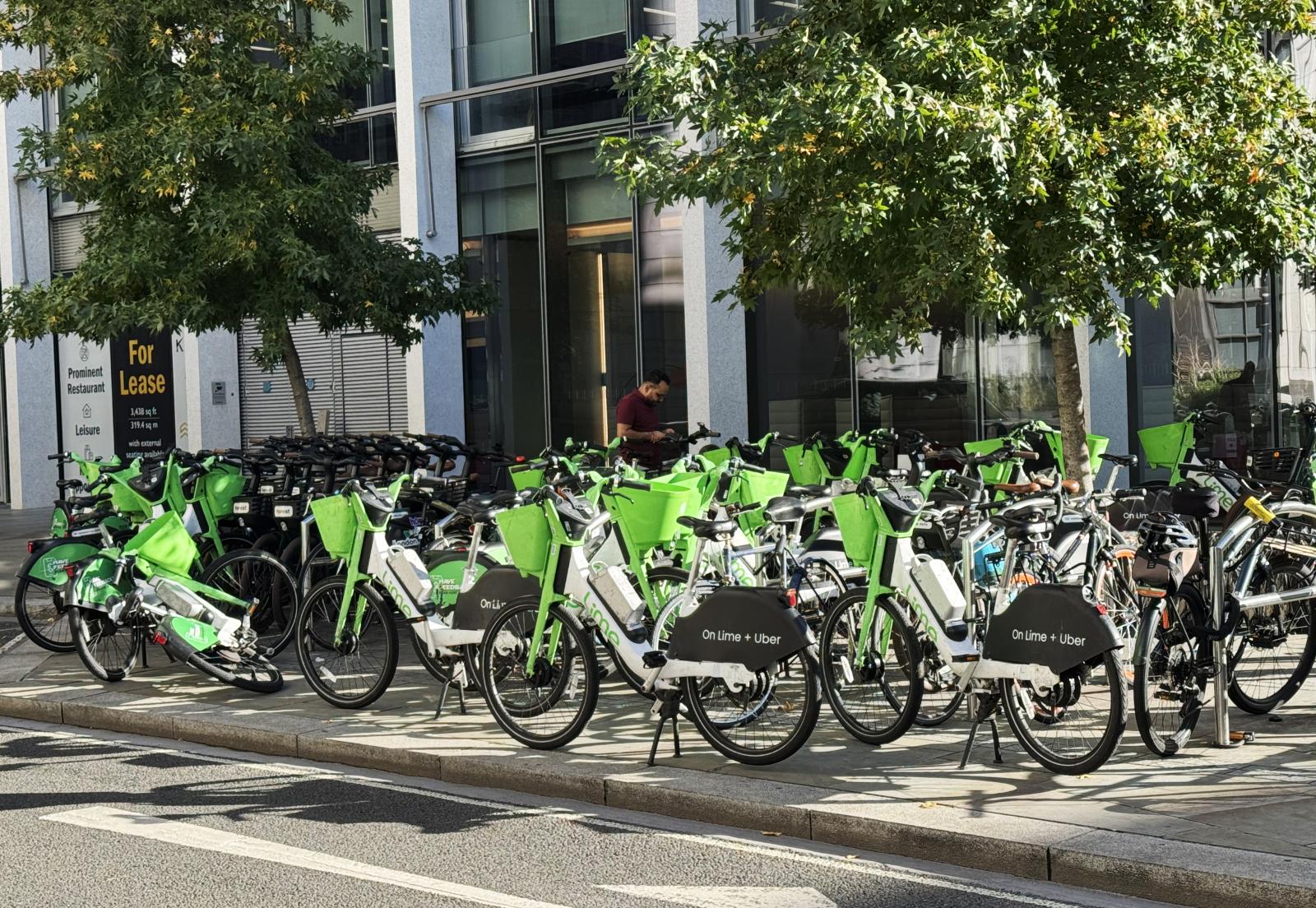

The Mayor of London has set out ambitious plans to overhaul the regulation of dockless e-bikes across the capital, ending what he describes as the current “Wild West” approach and introducing consistent standards for operators, riders and local authorities.
The announcement follows the passing of the English Devolution and Community Empowerment Act 2026, which enables the Secretary of State for Transport to grant Transport for London statutory powers to establish a London-wide licensing and regulatory framework for dockless micromobility schemes.
For almost a decade, London's dockless e-bike market has operated under a patchwork of borough-level agreements, with varying rules and enforcement measures across the capital. The proposed framework would replace this fragmented system with a single set of standards covering parking, operations, safety, enforcement and data sharing.
While secondary legislation and Department for Transport guidance are still required before the framework can be introduced, the Mayor has outlined how TfL intends to use the new powers once they come into force.
The proposed framework will focus on five central objectives:
1. One Set of Rules Across London
TfL aims to replace the current borough-by-borough model with a consistent capital-wide framework. This would provide greater clarity for residents, users and operators, ensuring uniform standards regardless of where journeys begin or end.
2. Improved Safety Standards
The Mayor wants safety to become a core requirement of all schemes through stronger city-wide standards covering vehicle maintenance, rider education, responsible use and enforcement.
3. Supporting London's Cycling Growth
Dockless e-bikes are expected to play a growing role in London's transport network, helping residents connect with employment, housing and public transport while encouraging more sustainable travel choices.
4. Tackling Poor Parking
Improperly parked bikes have become a significant concern for boroughs and accessibility groups. The framework aims to reduce street clutter, protect pedestrian space and use data-driven monitoring to identify and address problem locations.
5. Creating a Sustainable Market
The Mayor believes a clearer regulatory environment will encourage competition and innovation while supporting fair charging structures for riders, boroughs and operators.
The proposals come as cycling reaches record levels in the capital.
Daily cycling trips have increased by 43 per cent since 2019, making cycling London's fastest-growing mode of transport. Over the past decade, TfL has expanded the capital's Cycleways network from 90km in 2016 to more than 450km today, significantly increasing access to protected cycling routes.
Dockless e-bikes are playing an increasingly important role in this growth. TfL estimates that more than one in ten cycle journey stages were completed using a dockless bike in 2024.
To support the expansion of micromobility services, TfL has already allocated £1.7 million this year to boroughs for dedicated parking infrastructure, helping to deliver more than 36,000 parking spaces across London streets.
Despite these investments, concerns remain around parking, accessibility, rider behaviour and collision risks. Campaigners have highlighted the impact of poorly parked bikes on older people and disabled residents, while questions remain around liability and protection for individuals injured in incidents involving hire bikes.
London Mayor Sadiq Khan said:
“The ‘Wild West’ approach to dockless e-bikes cannot continue. While these services are helping thousands more Londoners to cycle, their rapid growth has also brought challenges around safety, inconsiderate parking, and the lack of data needed to properly manage them.
“I’ve been calling for powers to better manage dockless e-bike schemes since 2017, when the first schemes arrived in London, so I welcome the Government’s plans to give cities the powers they need to do this. For too long, cities have been left without the tools needed to properly manage these services, despite clear evidence that the current approach is not working.
“It’s now vital that the Department for Transport moves quickly to bring forward the secondary legislation needed to make these powers a reality. London cannot afford further delays.
“To speed things up, rather than waiting, I’m today setting out my ambitions for effective management of dockless e-bikes once secondary legislation has passed – a framework to improve safety and data sharing, tackle poor parking and create consistent standards across the capital.
“In the meantime, we will work closely with dockless operators and ensure that they engage fully with London boroughs and TfL to ensure their services work well for all Londoners, as we build a better London for everyone.”
The proposed licensing framework cannot be introduced until the Government completes consultation on the required secondary legislation and guidance. However, TfL is already working with London boroughs to develop implementation plans and aims to publish further details later this year.
For public sector leaders, transport planners and local authorities, the reforms could represent a significant shift in how rapidly growing micromobility services are managed, funded and integrated into wider transport networks.
Image credit: iStock