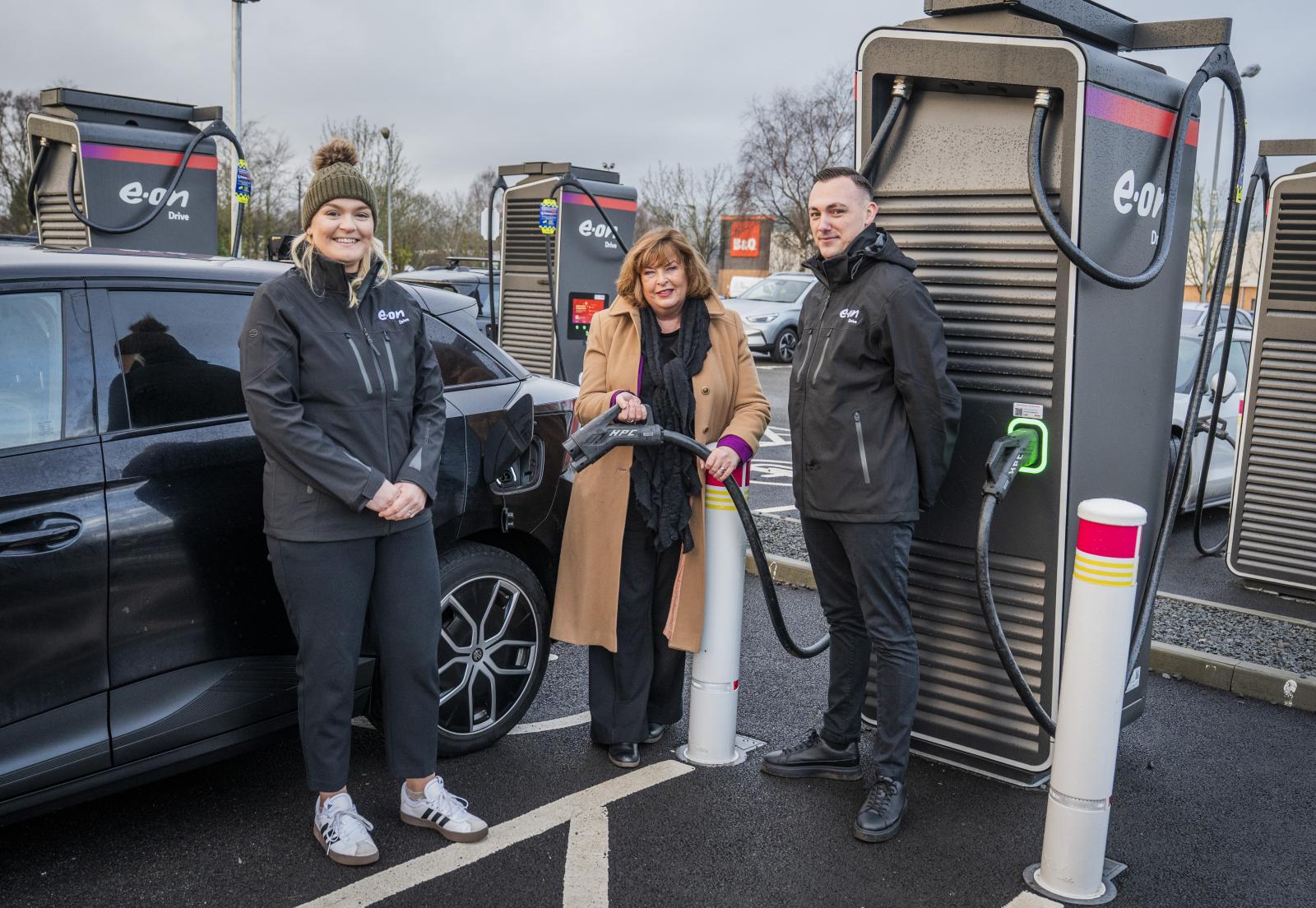

The Scottish Government has confirmed £85 million of investment to support the rollout of critical electric vehicle charging infrastructure and accelerate the transition to zero emission vehicles, as part of a record transport funding package outlined in the draft Scottish Budget 2026–27.
Announced today by Cabinet Secretary for Transport Fiona Hyslop, the funding forms part of more than £4 billion to be spent on transport in the coming financial year, signalling a major commitment to tackling climate change, improving connectivity and delivering a greener, more sustainable transport system across Scotland.
The draft Budget commits £4.3 billion to transport investment, with a record £2.7 billion dedicated to public transport alone. Significant funding has also been earmarked for low‑carbon transport infrastructure, reflecting the Scottish Government’s ambition to reduce emissions and support a just transition to net zero.
The £85 million EV charging investment is intended to address growing demand as more drivers make the switch to electric vehicles, helping ensure that rural, urban and island communities have reliable access to charging facilities. The funding is expected to support both commercial and public sector initiatives, strengthening Scotland’s national EV charging network.
Alongside electric vehicle infrastructure, the Scottish Government has allocated £316 million for sustainable travel, low‑carbon and climate‑positive activities. This funding aims to reduce reliance on private car use by promoting walking, wheeling and cycling for shorter journeys, as well as supporting public transport and behaviour change initiatives.
Investment in active and sustainable travel is seen as a key pillar of Scotland’s transport strategy, helping to deliver cleaner air, healthier communities and reduced congestion, while also lowering transport emissions.
Fiona Hyslop, Scottish Cabinet Secretary for Transport, said:
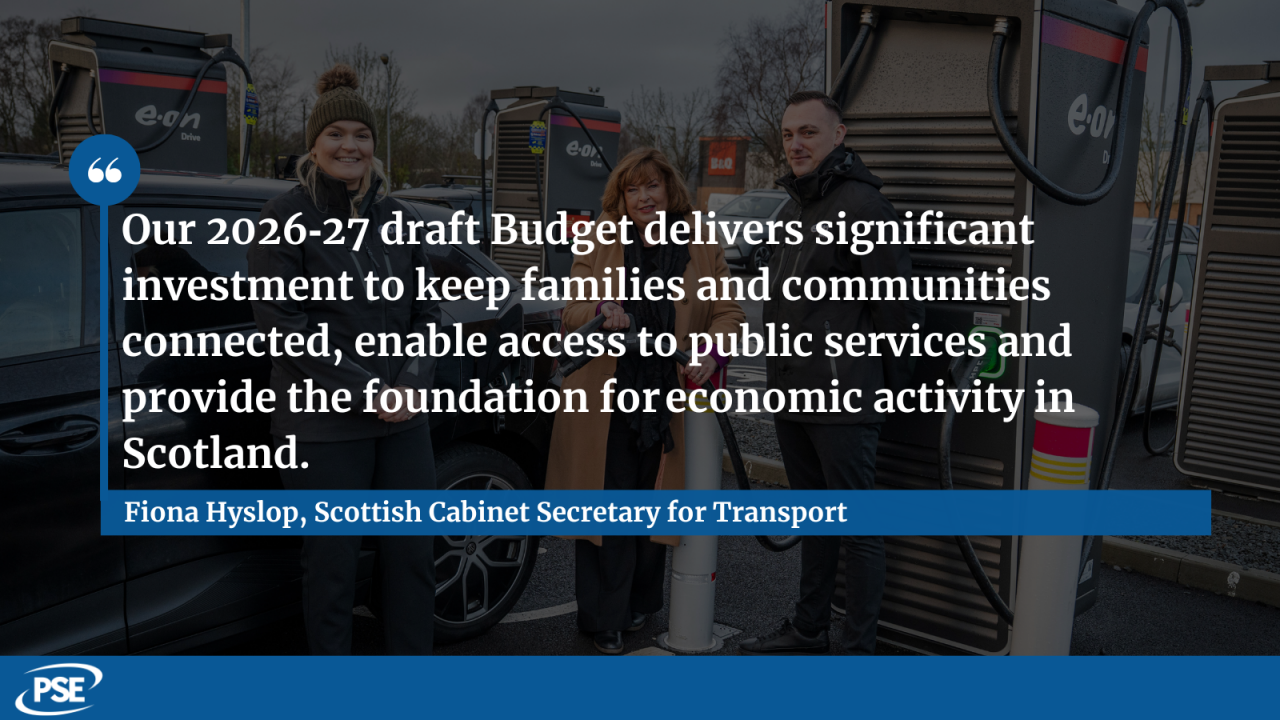
“Our 2026‑27 draft Budget delivers significant investment to keep families and communities connected, enable access to public services and provide the foundation for economic activity in Scotland.
“We know that we need to reduce emissions and support a Just Transition to net zero by 2045 – that’s why, in 2026-27 we will provide £85 million to fund new and continuing low carbon activities, including further developing Scotland’s EV charging network and new incentives to continue to support consumers and businesses to make the switch to electric vehicles.
“We are also using our Non-Domestic Rates regime to further our net zero ambitions by introducing a relief for qualifying Electric Vehicle charging points for 10 years.
“Our plans for the next financial year and beyond will deliver against the First Minister’s priorities and Programme for Government commitments, guided as ever by our National Transport Strategy. Protecting our climate has never been more important and this draft Budget strengthens our resolve and commitment to do so.”
Transport remains Scotland’s largest source of emissions, making targeted investment in zero emission vehicles, public transport and active travel critical to meeting climate targets. The draft Budget’s focus on clean mobility aligns with wider efforts to decarbonise transport, stimulate green jobs and future‑proof infrastructure.
The funding will also support innovation in low‑carbon technologies, helping local authorities, businesses and communities transition away from fossil fuels while improving accessibility and fairness within the transport system.
Following parliamentary scrutiny, final budget decisions are expected later in the year, with funding supporting delivery throughout the 2026–27 financial period.
Image credit: Transport Scotland