

A major new initiative designed to help people with health conditions and disabilities remain in work has been unveiled, with business leaders and Government backing a new Workplace Health System that could transform the way employers support staff across the UK.
The latest report from Sir Charlie Mayfield, co-chair of the Keep Britain Working programme, highlights the urgent need for earlier intervention and better workplace support as economic inactivity linked to poor health continues to rise.
Around 300,000 people leave work each year because of a health condition, despite evidence suggesting many departures could be prevented.
Research cited in the report shows that an employee absent from work for between four and six weeks has a 96 per cent chance of returning. However, after a year away from work, fewer than half successfully return.
Since 2019, the number of working-age people out of work due to ill health has increased by 800,000. The resulting impact on the economy is estimated at approximately £212 billion annually.
The proposed Workplace Health System has been designed to address this challenge by creating healthier, more inclusive workplaces while ensuring employees receive support before health issues become barriers to employment.
The initiative aims to bring together employers, the NHS, local authorities and support providers into one coordinated system focused on keeping people in work and supporting successful returns following sickness absence.
The programme is already being tested through 11 regional Vanguard areas, including nine Mayoral Strategic Authorities, alongside Cornwall Council, Hull City Council and Worcestershire City Council.
More than 200 organisations are participating in trials across England, Scotland, Wales and Northern Ireland.
Several regions are already piloting innovative approaches:
- Liverpool City Region is testing draft return-to-work plans developed alongside employers.
- Hull City Council, working with occupational health provider Latus, is establishing the Hull Resilience Hub, enabling SMEs to access occupational health services at rates typically available only to larger organisations.
- South Yorkshire Mayoral Combined Authority is trialling independent case workers who will spend part of their time embedded within businesses to support employees dealing with health concerns.
Speaking in the report, Sir Charlie Mayfield said:
“Britain has spent too long treating economic inactivity as a welfare problem. It is not.
“Instead, it’s one of the largest and most attainable growth opportunities this country has.
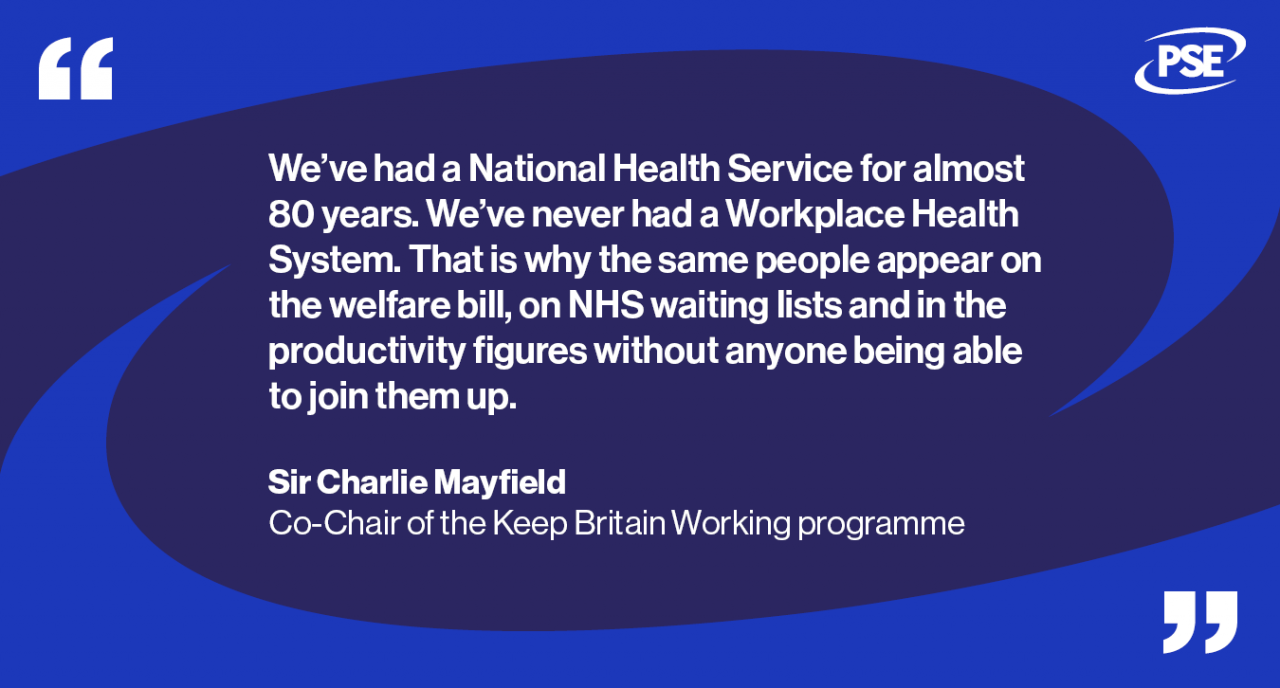
“We’ve had a National Health Service for almost 80 years. We’ve never had a Workplace Health System. That is why the same people appear on the welfare bill, on NHS waiting lists and in the productivity figures without anyone being able to join them up.
“It’s also why we are missing the best moments to help people. The new Workplace Health System would change that.
“Ten months of building and testing with employers, mayors, providers, unions and disabled people have made us even clearer about what needs to change and more confident that a new system that helps to drive economic growth is within reach.
“The task now is to build it.”
A key focus of the programme is ensuring workplace health support is accessible to smaller employers, not just large corporations.
An employer standard is currently being developed with the British Standards Institution (BSI), while pooled procurement models and insurance-based solutions are being explored to reduce costs for SMEs.
The objective is to establish a consistent benchmark for workplace health support while making services more affordable and accessible.
The Workplace Health System sits within a wider £3.5 billion employment support package.
Key programmes include:
- WorkWell, backed by £259 million, which aims to help up to 250,000 people remain in or return to employment.
- Connect to Work, which will provide tailored support for 300,000 disabled people and those with long-term health conditions.
- More than 1,000 full-time Pathways to Work advisers already operating across Britain.
Pat McFadden, Work and Pensions Secretary, said:
“Too many people fall out of work because of a health problem that could have been caught earlier, and too many employers have no way of knowing whether they are getting this right.
“This programme is working hand in hand with employers, mayors and local leaders to change that, so that good workplace health support is not just for big companies and it delivers growth across every postcode.”
Alongside practical support measures, the programme is also seeking to address significant gaps in workplace health data.
Many employers currently have limited visibility of how effectively they retain staff with health conditions or track their long-term outcomes following periods of sickness absence.
A new employer data project and work and health prototype are expected to launch this autumn, providing organisations with stronger evidence and insights to guide workplace health strategies.
Over the coming year, programme leaders will continue working with BSI and participating Vanguard organisations to refine standards, test commitments and build a stronger evidence base on what works in supporting employee health and retention.
Image credit: iStock