
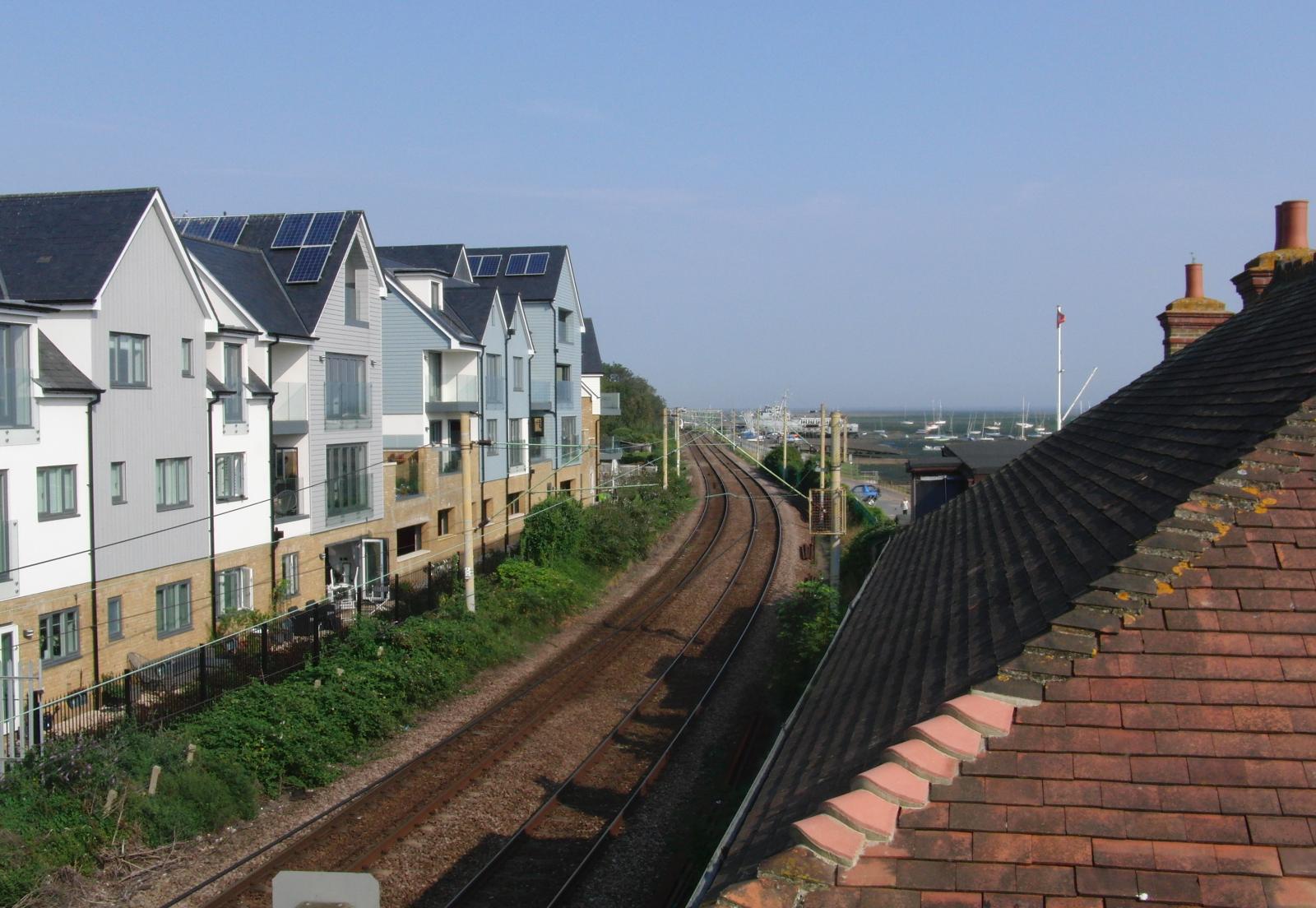

New planning rules will accelerate housebuilding near train, tram and Underground stations across England, with ministers promising faster approvals, stronger economic growth and better-connected communities.
Thousands of new homes are set to be built within walking distance of England’s busiest transport hubs under sweeping planning reforms unveiled by the government today.
The changes, introduced through the updated National Planning Policy Framework (NPPF), are designed to speed up housing delivery in well-connected locations while making better use of underdeveloped land around stations. Ministers say the reforms will help more people live closer to work, schools and essential services, while also supporting local businesses and creating jobs.
A central feature of the new policy is a default presumption in favour of residential development near transport hubs, creating a clearer pathway for councils and developers to bring forward schemes in areas with strong public transport links.
The government says the measures will help move developments more quickly from planning approval to construction, supporting its ambition to deliver 1.5 million new homes during this Parliament.
Under the revised framework, councils will be expected to support higher levels of housing development in areas within reasonable walking distance of well-connected stations. The reforms also seek to reduce unnecessary planning requirements where national standards already exist, preventing what ministers describe as excessive "gold-plating" of developments.
Alongside boosting housing supply, the government argues the changes will strengthen local economies by attracting investment and supporting regeneration around transport corridors.
Secretary of State for Housing, Communities and Local Government Angela Rayner said:
“A safe, secure home is the foundation of opportunity, but too many people are being priced out of the communities where they want to live and work.
“By unlocking thousands of homes around well-connected transport hubs, we’re helping people live closer to work, school and the services they rely on, while backing local businesses and driving growth in our communities.
“That’s how we’ll tackle the housing crisis and raise living standards for people in every corner of the country.”
The announcement follows the publication of the government's Better Connected: A Strategy for Integrated Transport earlier this year, which committed to encouraging higher-density development around transport hubs.
Transport Secretary Heidi Alexander said:
“Earlier this year, we published Better Connected: A Strategy for Integrated Transport. The steps announced today act on a key commitment we made as part of that Strategy, to support densification of development around well-connected stations to create vibrant, sustainable and well-connected homes and places.
“The changes being announced today turn long-held ambitions into reality for our communities. Densification, combined with high-quality walking, wheeling, cycling and public transport, will support healthier lifestyles, improve access to jobs and services, and protect important public transport services.”
Alongside measures aimed at increasing housing delivery, the government has reaffirmed protections for pubs and music venues, stating that valued community assets should not be lost without strong justification.
The planning shake-up is also intended to make it easier for councils to approve developments that support local economic growth, including retail spaces, leisure facilities, clean energy projects and food production infrastructure.
The reforms build on changes announced last week to support farmers and rural businesses, including streamlined approval processes for reservoirs, greenhouses, polytunnels and farm shops.
Ministers are also seeking to remove what they describe as unnecessary bureaucracy from planning decisions. Councils will no longer require formal sign-off from certain public bodies where specialist input is not essential.
Instead, expert consultation will be focused on applications where it adds clear value. Organisations such as Sport England, the Gardens Trust and the Theatres Trust will continue to be involved in relevant planning applications.
The reforms form part of a wider overhaul of England’s planning system, aimed at accelerating housebuilding, supporting infrastructure investment and driving economic growth across the country.
Image credit: iStock