

Communities across England are set to gain new, enforceable expectations for the quality of local public services under a major package of reforms announced today (21 May), aimed at shifting power from Whitehall back to neighbourhoods.
For the first time, issues that matter most to residents – including cleaner streets, filled‑in potholes and reliable local services – will be brought together under a new Neighbourhood Guarantee, setting minimum standards people can expect in the places they live.
Local leaders will be asked to work closely with the central government to meet these expectations and deliver visible improvements, while new powers will be introduced to intervene where standards fail to improve.
Alongside the Guarantee, ministers are bringing forward a wider set of reforms designed to put communities in control, ensure public services work for people rather than private profiteers, and give councils and mayors stronger tools to deliver change on the ground.
Neighbourhood Guarantee and community control
At the heart of the reforms is a commitment to closer collaboration between councils, residents and community groups. New Community Power Pilots will be launched in up to 25 areas, enabling local services to be co‑designed with the people who use them.
The pilots will cover areas such as early years provision, youth services and community safety, with services shaped around local priorities rather than national templates. Residents will be invited to work alongside councils to decide how spaces such as parks and community hubs are used and what services they should provide.
Cracking down on profiteering in public services
The government is also taking action to tackle profiteering by private companies delivering council services, particularly in areas supporting vulnerable children.
New legislative powers will allow ministers to introduce and enforce a profit cap if required, following closer monitoring of the children’s social care market. These measures sit alongside wider reforms to fix the broken placements system, expand fostering, support families earlier and ensure residential care is used only when necessary.
Restoring high streets and tackling clustering of harmful premises
Ministers also signalled tougher action to address the changing face of high streets, where the growth of vape shops and gambling premises has become a major concern for communities.
Councils will be given new powers to restrict certain types of shops, take over long‑term empty units and repurpose them for services, community activities or new businesses. Gambling Impact Assessments are already being introduced to help limit the clustering of gambling premises, particularly in deprived areas.
These changes will be reinforced by the Home Office’s new High Street Organised Crime Unit, targeting organised crime operating through businesses including vape shops and barbers.
New powers for mayors and local leaders
The reforms also include further devolution to mayors, building on the English Devolution and Community Empowerment Act. New powers being signed off include the ability for mayors to approve Transport and Works Act Orders in their own areas, speeding up delivery of major projects such as tram networks.
The government will also work with the Mayor of Liverpool City Region to trial a place‑led approach to improving school standards, alongside new partnerships with Deputy Mayors for Health in Greater Manchester and South Yorkshire.
Extending control to housing and neighbourhoods
The same principle of local control is being extended to housing through the Renters’ Rights Act and ongoing commonhold and leasehold reforms.
Ministers have reaffirmed their commitment to Right to Manage, making it easier for social housing residents to take control where they face high service charges and poor performance. A review is underway to simplify the process, alongside plans to implement Law Commission recommendations on leasehold right to manage within this parliament.
Communities Secretary Steve Reed said:
“People want to live in neighbourhoods where streets are clean and safe, the high street is vibrant, and core public services are available. But too often this isn’t what happens.
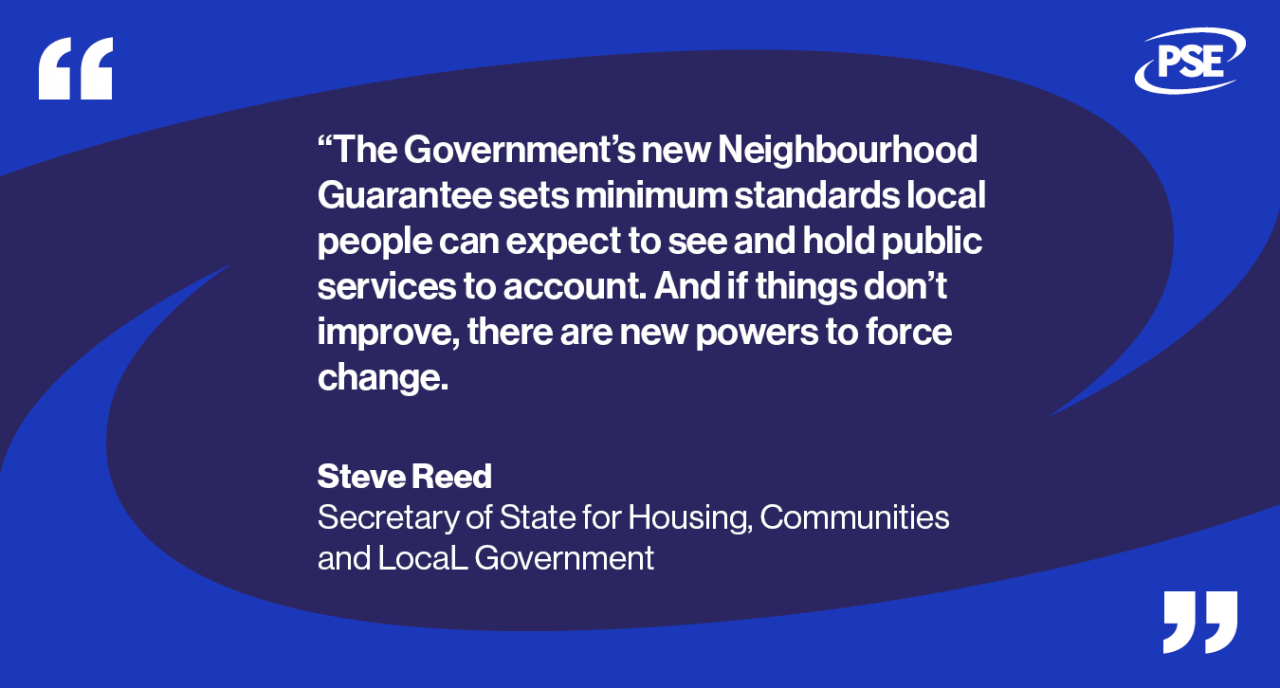
“The Government’s new Neighbourhood Guarantee sets minimum standards local people can expect to see and hold public services to account. And if things don’t improve, there are new powers to force change. This is all about showing respect for the places people call home.”
Together, the Neighbourhood Guarantee, Community Power Pilots, tougher regulation of private providers and expanded mayoral powers mark a significant shift in how local services are designed and delivered – with the government arguing that change should be seen and felt in every neighbourhood.
Image credit: iStock