

Millions of bus passengers across England are set to save money on everyday travel after Prime Minister Andy Burnham announced a new £2 cap on single bus fares during his first week in office.
The measure, which comes into force on 1st January 2027 and will remain in place until the end of the year, will reduce the maximum cost of single bus journeys by a third, helping households tackle rising living costs while improving access to jobs, education, healthcare and leisure opportunities.
Backed by an additional £400 million in government funding, the scheme will apply to participating bus services across England outside London. Ministers say the move will make public transport more affordable, particularly for those living in rural and coastal communities where fares can often be significantly higher.
Government figures suggest the previous £2 fare cap led to an estimated 30 million additional bus journeys in just ten months, demonstrating the impact lower fares can have on passenger numbers and local economies.
Transport campaigners have long argued that affordable public transport is essential for connecting communities and supporting economic growth. Without intervention, some bus fares on the most expensive routes could rise above £10 for a single journey.
The policy is also expected to benefit younger people entering the workforce, with travel costs often cited as a barrier to employment and training opportunities.
Prime Minister Andy Burnham said:
“Good, affordable transport links are an essential. No one should be priced out of those and left behind.
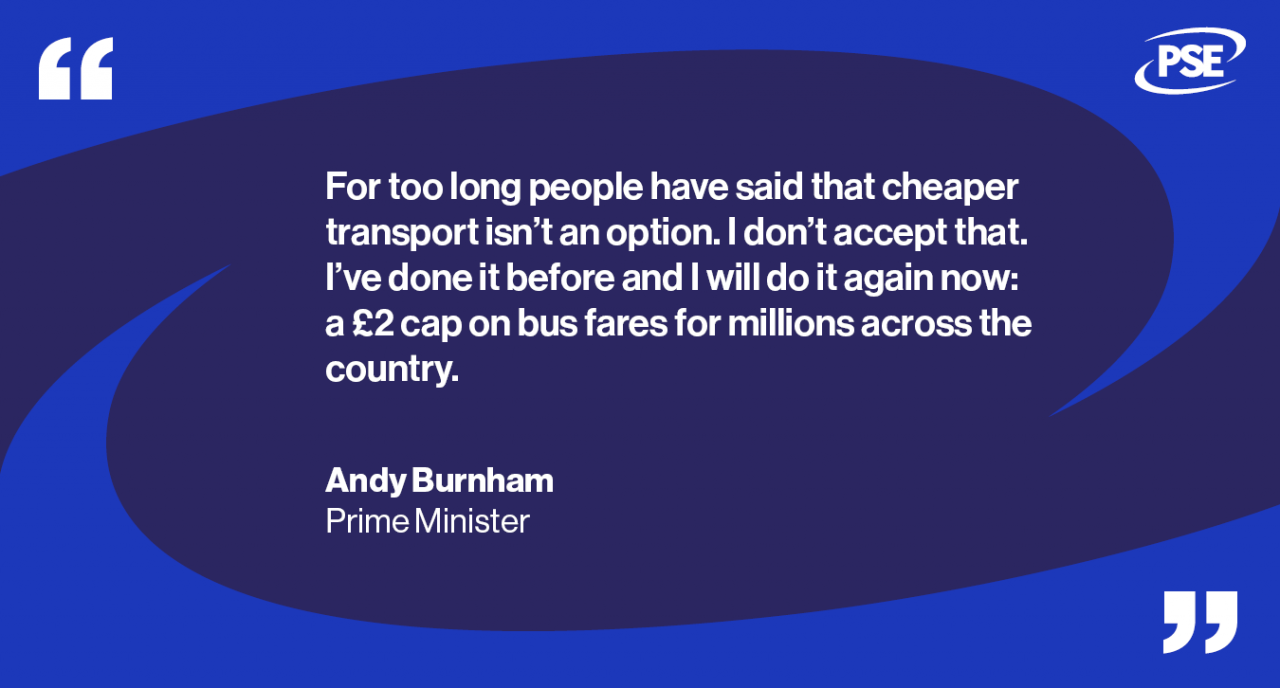
“But for too long people have said that cheaper transport isn’t an option. I don’t accept that. I’ve done it before and I will do it again now: a £2 cap on bus fares for millions across the country.
“Lower fares will help people get to where they need to – giving them breathing space to help with the cost of living.
“As I said on my first day in office – I will build a country for everyone, everywhere. That means more connected communities, better access to opportunities, and a lighter load on people’s lives.”
Funding and Long-Term Planning
The government said the initiative will be funded through an additional £454 million package, including allocations for the devolved administrations. Funding will be secured through a reprioritisation of the Department for Energy Security and Net Zero budget, converting money previously earmarked for international climate finance projects into loans.
The announcement also prevents fares rising when the current £3 fare cap expires in spring 2027. Instead, passengers will see fares reduced to £2 from January, while local authorities gain greater certainty to plan transport services over the longer term.
Support for Local Transport Networks
The fare reduction follows the government’s recent announcement of £100 million for free bus travel for children aged 5 to 15 in England during the summer holidays under the Great British Summer Savings scheme.
At the same time, ministers are continuing to expand bus franchising powers. Six mayoral authorities are being supported to take greater control of local bus services, building on the model used by Greater Manchester’s Bee Network, where £2 single fares have remained in place for four years.
The government is also planning a consultation on increasing transport-related planning powers for mayors, giving local leaders greater influence over public transport decisions, including future mass transit schemes.
More than £1 billion per year has already been committed to supporting bus services over the next three years. Ministers say this investment will enable councils and combined authorities to improve reliability, expand routes and strengthen transport links in both urban and rural communities.
Railway Fare Freeze Adds Further Savings
The bus fare announcement comes alongside the government’s recently announced rail fare freeze, the first in 30 years. Ministers estimate the move will save rail passengers £600 million overall, with some regular commuters expected to save more than £300 a year.
From January 2027, passengers on participating services across England outside London will benefit from the new £2 fare cap, while devolved governments will continue to receive transport funding through the Barnett formula.
Image credit: iStock