

Passengers across England are set to see tougher action against antisocial behaviour on public transport as the Government launches a package of measures aimed at improving everyday journeys.
The initiative, announced today, introduces new powers for local authorities to tackle nuisance behaviour on buses, including issuing fixed penalty notices of up to £100. At the same time, a nationwide rail campaign will target so-called "loudcasting" - passengers playing music, videos or other audio aloud from mobile devices without headphones.
The measures form part of the Government’s wider drive to improve the passenger experience and address common complaints raised by commuters and public transport users.
New guidance issued today will help local transport authorities implement powers granted under the Bus Services Act 2025. The legislation allows authorities across England to create and enforce their own byelaws covering behaviour such as:
- Playing loud music
- Littering
- Vaping
- Threatening or intimidating conduct
Those found breaching local rules could face fixed penalty notices of up to £100.
Bus drivers will not be responsible for enforcement. Instead, authorised officers, including Transport Safety Officers and police officers, will manage incidents using a three-stage process of engagement, explanation and enforcement where necessary.
The enforcement powers officially came into force on 5 August 2026, with each local authority byelaw requiring approval from the Secretary of State before it can be enforced.
Alongside the bus measures, the Government and rail industry have launched a new campaign encouraging passengers to "share the carriage, not the noise".
The campaign seeks to address growing frustration about passengers playing audio through phone speakers during rail journeys. It will introduce consistent messaging across the national rail network, replacing the existing patchwork of campaigns run by individual train operators.
Rail passengers who refuse to stop playing audio aloud when instructed by authorised staff could be removed from a train at the next station or face penalties of up to £1,000 under existing railway byelaws.
Messaging will appear across:
- Train operator websites
- Social media channels
- Posters in stations and onboard trains
- Public address announcements
The move is also being positioned as an example of how publicly owned train operators can deliver a more joined-up and consistent customer experience.
Prime Minister Andy Burnham said:
“We’ve all been on the train when someone starts blasting music or videos from their phone. It gets on your nerves and can quickly spoil the journey.
“So, we’re launching a nationwide campaign reminding passengers to use headphones on trains. On top of that, we’re giving local leaders new powers to tackle loud music, vaping and littering on buses.
“It’s a simple thing, but one that will make journeys that little bit better for all of us.”
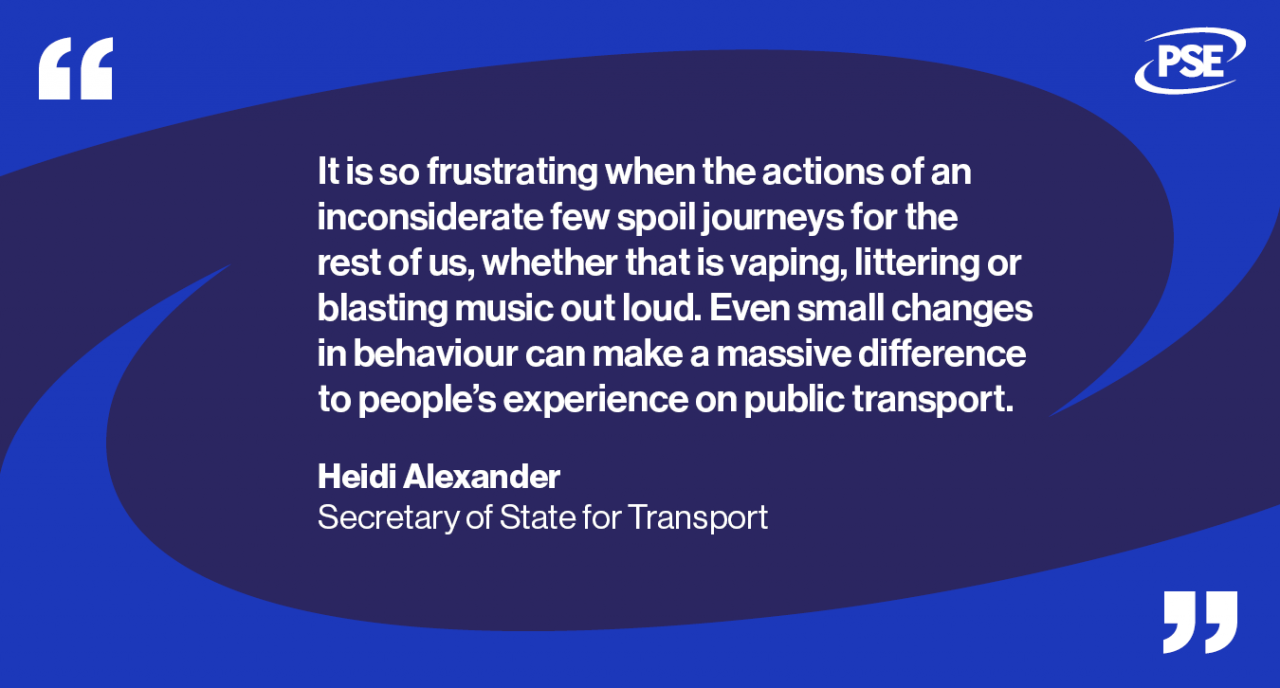
Transport Secretary Heidi Alexander added:
“It is so frustrating when the actions of an inconsiderate few spoil journeys for the rest of us, whether that is vaping, littering or blasting music out loud. Even small changes in behaviour can make a massive difference to people’s experience on public transport.
“That’s why we’re empowering local leaders to shape bus services around the needs of their communities and taking advantage of publicly owned Train Operating Companies to encourage people to be considerate of others on public transport and reminding them of the potential consequences if they aren’t.”
The announcement represents one of the most significant expansions of local authority enforcement powers on buses in recent years. For transport leaders, the measures provide new tools to tackle low-level antisocial behaviour that can disproportionately affect passenger confidence and satisfaction.
The success of the policy will ultimately depend on how widely local authorities adopt the new powers and how consistently the rules are enforced across England's bus and rail networks.
Image credit: iStock
Meta