

Local leaders, education experts and business figures are meeting in Manchester today as the government looks to reshape England’s education system and strengthen pathways into employment for young people.
Hosted by the Education Secretary at No10 North, the summit brings together regional mayors, headteachers, college principals and industry leaders to help shape plans designed to make England a global leader in technical education. The discussions are expected to focus on ensuring technical and academic routes are given equal status while better preparing young people for the workforce.
The meeting follows the latest Programme for International Student Assessment (PISA) rankings, which showed England either improved or maintained performance levels despite a broader international decline in educational outcomes. England continues to score significantly above OECD averages in reading, maths and science. Estonia, frequently cited as a leading education system, has demonstrated that strong academic performance can successfully coexist with high-quality technical education.
A key area of discussion will be the delivery of vocational education reforms from the age of 14, expanding work experience opportunities and ensuring local areas maximise the benefits of devolved funding for 16 to 19-year-olds.
The summit marks the first in a planned series of regular meetings bringing together government, industry and education leaders to help drive reform. It also comes ahead of the publication of the government’s Devolution White Paper, which is expected to give local leaders a greater role in shaping economic growth, skills development and opportunity within their communities.
Opening the event, Education Secretary Lucy Powell is expected to emphasise the importance of local leadership in driving change.
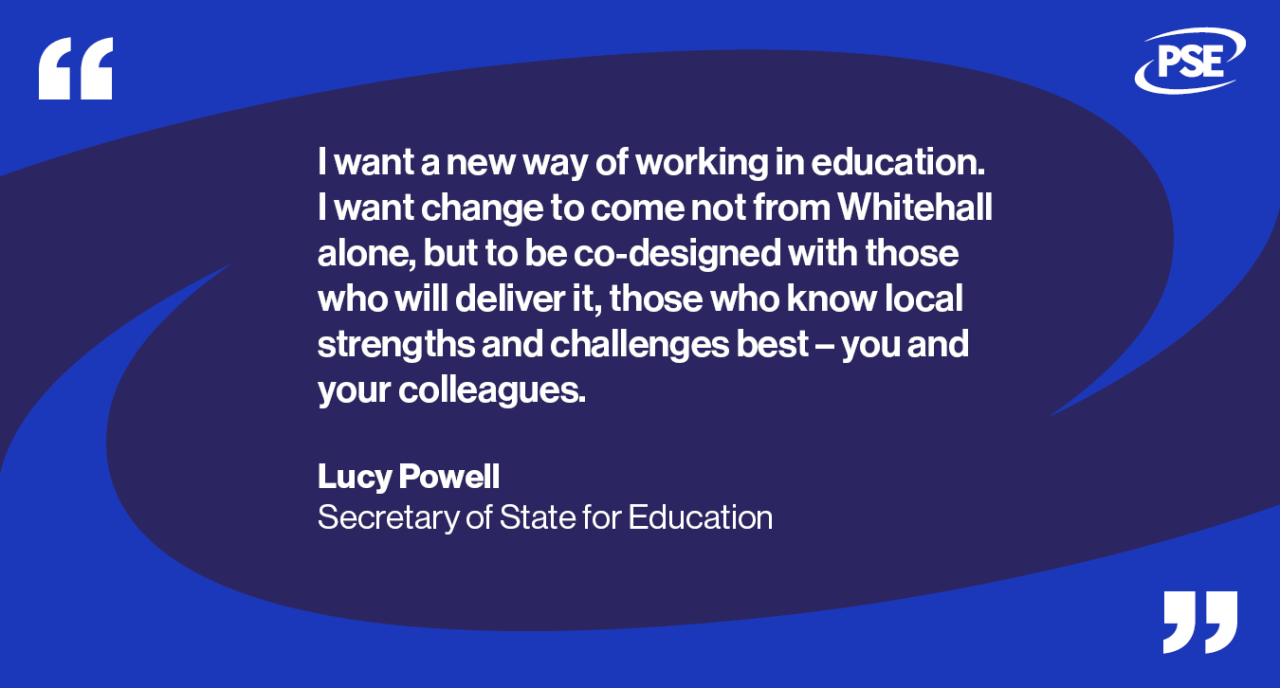
“I want a new way of working in education. I want change to come not from Whitehall alone, but to be co-designed with those who will deliver it, those who know local strengths and challenges best – you and your colleagues.
“That’s what we’re here today, and that’s how I want us to see devolution. I want it to be at the heart of a different way of doing things: a partnership between national government and local areas, so that we can bring the change that children, young people and families need, up and down the country.”
The reforms build on the government’s introduction of V Levels for learners aged 16 and over, alongside the expansion of T Levels from next September. Ministers believe the changes will help address the challenge of almost one million young people currently not in education, employment or training (NEET).
Alongside the Manchester summit, Minister Smith will deliver her first major speech to the higher education sector at Universities UK’s annual conference. She is expected to call on universities to play a central role in the government’s skills and growth agenda by working more closely with local authorities, colleges and employers.
The approach is already delivering results in several regions. In the Humber, the University of Hull has developed strong partnerships with employers including Siemens Gamesa and Ørsted, providing students with industry placements, graduate opportunities and specialist apprenticeship programmes designed to train future offshore wind engineers.
Elsewhere, in the West of England, UWE Bristol and University Centre Weston collaborate with major employers including Airbus, Rolls-Royce and GKN Aerospace to deliver engineering degree apprenticeships. These programmes allow learners to combine paid employment with degree-level study while ensuring training reflects the skills needs of advanced manufacturing and aerospace industries.
With skills shortages continuing to challenge employers across the country, ministers hope closer collaboration between local government, education providers and businesses will help create stronger pathways into skilled careers, boost productivity and support long-term economic growth.
Image credit: iStock