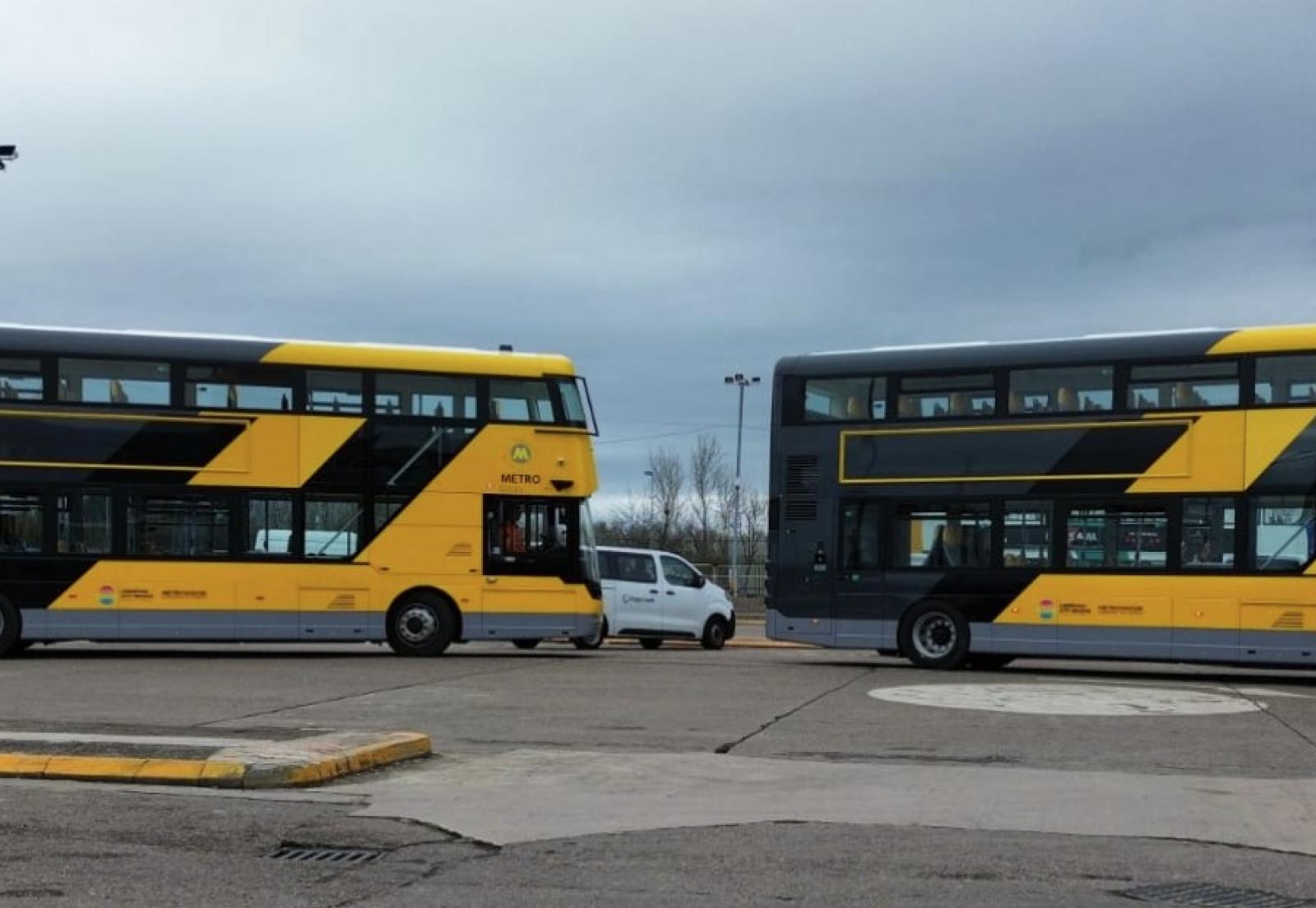

The first of more than 100 publicly owned electric buses has arrived in the Liverpool City Region, marking a significant milestone in the transformation of the region’s public transport network. The zero‑emission double‑deckers – finished in the distinctive yellow, grey, and black ‘Metro’ livery –will be followed by dozens more in the coming months.
The electric fleet, manufactured by Wrightbus and Alexander Dennis Limited, is owned by the Liverpool City Region Combined Authority and will soon begin driver training before entering passenger service later this year.
These buses are among the most efficient of their kind, capable of travelling up to 275 miles on a single 90‑minute charge. They include a wide range of high‑specification features designed to improve accessibility, comfort, and passenger experience, such as extra space for wheelchair users and prams, audio‑visual announcements with real‑time information, USB charging ports, and free on‑board Wi‑Fi.
Their introduction forms a key part of Mayor Steve Rotheram’s commitment to achieving net zero carbon across the Liverpool City Region by 2035.
In 2023, the Mayor made the landmark decision to bring bus services back under local public control for the first time in four decades. Under bus franchising, which begins in St Helens this autumn and will roll out across the region by 2027, the Combined Authority will set routes, fares, and timetables.
This approach ensures services are designed around passenger needs rather than private shareholder interests.
Over the coming years, the Combined Authority will invest hundreds of millions of pounds to upgrade the entire bus network. Key areas of investment include:
- New state‑of‑the‑art vehicles
- Modern depots
- Smart ticketing
- Faster, more reliable services
- Greener, easier, and more accessible travel
Liverpool City Region Mayor Steve Rotheram said:
This year will be remembered as a turning point for public transport in the Liverpool City Region. After four decades of deregulation, we are taking back control of our buses and building a network that works in the interests of passengers, not shareholders.
“The arrival of our new publicly-owned electric fleet is a tangible example of that change. These state-of-the-art, zero-emission buses – alongside our £500m fleet of trains fitted with pioneering battery technology – will give people a genuine alternative to the car, improve air quality and help us meet our ambitious target of becoming net zero by 2035.
“We’re putting the public back into public transport with better services, simpler fares and the modern, affordable network out 1.6 million residents deserve.”
With hundreds of thousands of bus journeys taken daily by the region’s 1.6 million residents, buses remain central to the Mayor’s vision for an integrated transport system.
The investment is backed by the £1.6bn Transport for City Region settlement.
The new electric buses build on several years of record‑level transport investment across the Liverpool City Region, including:
- A £500m fleet of new Merseyrail trains
- Extensions to the Merseyrail network, including Maghull North and Headbolt Lane
- A new £35m St Helens town centre transport interchange
- Construction of the first new Mersey Ferry in over 60 years
Taken together, the investments represent one of the most ambitious upgrades to a UK transport network in decades.
Image credit: Liverpool City Region Combined Authority