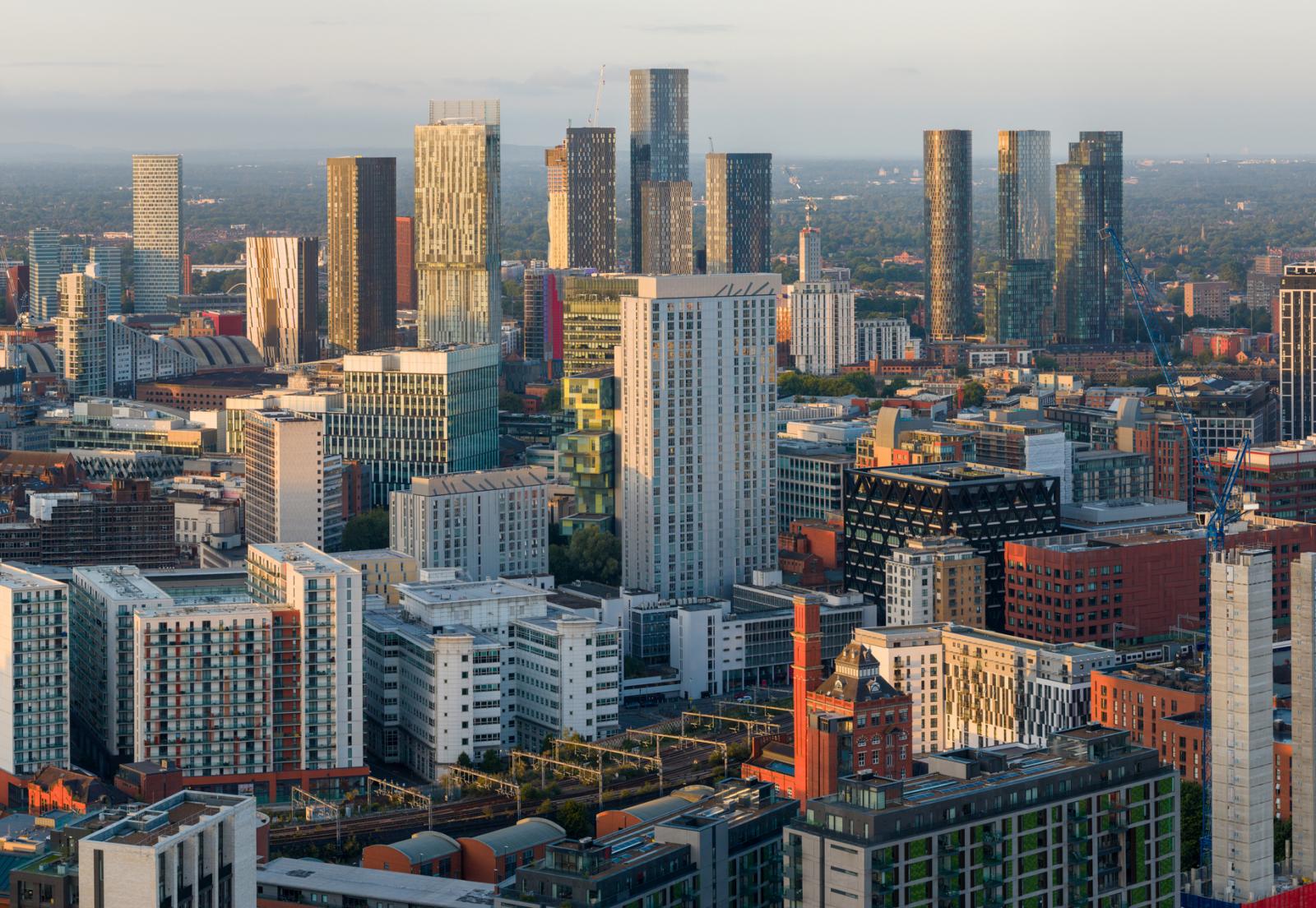

The ambition is detailed in the newly launched Greater Manchester Innovation Plan 2035, unveiled by Bev Craig, Mayor of Greater Manchester, and Andrew Hodgson, Chair of Innovation Greater Manchester, at the Greater Manchester Innovation Expo 2026.
Hosted by the Greater Manchester Business Growth Hub, the event brought together hundreds of investors, entrepreneurs, researchers and business leaders to showcase the city region's strengths in science, technology and innovation while fostering new partnerships to drive economic growth.
Greater Manchester's economy has expanded at twice the rate of the wider UK over the past ten years, surpassing £100 billion in economic value for the first time. The region has also recorded the strongest productivity growth in the country.
Innovation has been a key driver of this success, particularly across strategic sectors such as advanced manufacturing, health innovation and digital technologies.
The new plan outlines how further devolution, combined with continued Government support, could help Greater Manchester establish itself as one of Europe's leading second-city economies over the next decade.
Importantly, the strategy places inclusive growth at its core, aiming to ensure the benefits of innovation are shared across communities through better jobs, improved public services and rising living standards.
The Greater Manchester Innovation Plan is built around five strategic pillars designed to strengthen the region's innovation ecosystem:
- Create a world-class environment for innovation commercialisation
- Enhance navigation of the Greater Manchester and UK innovation ecosystem
- Accelerate Greater Manchester innovation investment
- Create an innovation-ready, globally competitive workforce
- Attract and integrate world-class commercial innovation
Together, these priorities aim to increase research and development activity, support business growth, attract international investment, develop local talent and accelerate the commercialisation of new technologies.
Bev Craig, Mayor of Greater Manchester, said:
"A more innovative economy means more jobs, higher wages and better living standards for people in Greater Manchester.
"We already have one of the strongest innovation ecosystems in the country, but we know we have what it takes to become one of the best in the world. This plan puts inclusive innovation at its heart. It's not just about growing businesses and creating high-quality jobs, but improving public services and ensuring communities across Greater Manchester benefit. Its five pillars give government, business, universities and partners a shared framework to attract more investment and turn more ideas into real-world impact."
Since the launch of the 2022 Local Innovation Plan, Greater Manchester has demonstrated the economic value of targeted innovation investment.
The region's £43 million Innovation Accelerator Programme has:
- Supported 10 innovation projects
- Brought 218 products and services to market
- Created 186 jobs
- Secured £53 million in private sector co-investment
Looking ahead, a further £50 million will be invested through the Local Innovation Partnerships Fund between 2026 and 2031.
Delivered by UK Government through UK Research and Innovation (UKRI) and local innovation partnerships, the fund will focus on accelerating commercial opportunities in:
- Advanced materials and manufacturing
- Health innovation
- Applied artificial intelligence
Additional support includes:
- Nearly £10 million for the Innovation Navigation Service
- £5 million for the Further Education Innovation Programme across Greater Manchester's nine colleges
- A £10 million Founders Fund from the University of Manchester to help commercialise academic research
- Access to the region's £2 billion Good Growth Fund to unlock employment and innovation space
The strategy is already producing tangible results.
Sustainable construction business Vector Homes has benefited from support provided by the GM Business Growth Hub and university research facilities. The company successfully tested sustainable building materials, developed an eco-home prototype and progressed a graphene-enhanced product towards commercialisation.
The business has secured more than £600,000 in investment and is creating five new full-time roles as it continues to scale.
Global diagnostics specialist QIAGEN has established its European Centre of Excellence for Precision Medicine at CityLabs in Manchester.
Working alongside Health Innovation Manchester, Manchester University NHS Foundation Trust and The University of Manchester, the initiative is helping develop next-generation diagnostic technologies while strengthening Greater Manchester's capabilities in genomics and precision medicine.
The partnership is expected to create high-value jobs and further enhance the region's reputation as a leading centre for life sciences innovation.
With a clear focus on commercialisation, skills, investment and international collaboration, the Greater Manchester Innovation Plan 2035 seeks to build on the region's existing strengths and create long-term economic and social benefits.
Backed by substantial public and private investment, the strategy represents one of the most ambitious regional innovation programmes in the UK and reflects Greater Manchester's determination to compete on the global stage while ensuring growth benefits residents across the city region.
Image credit: iStock