

Young people across the UK will soon have access to a new generation of Vocational GCSEs and significantly expanded work experience opportunities under sweeping reforms designed to strengthen technical education and improve employability.
The reforms form a central part of the government's ambition to place technical and vocational learning on the same footing as traditional academic qualifications, while tackling the growing challenge of young people who are not in education, employment or training (NEET).
The new qualifications will sit alongside traditional GCSEs and eventually replace existing Technical Awards, creating a nationally recognised and regulated pathway that offers greater consistency and progression opportunities.
Alongside curriculum reforms, ministers have launched a National Mission on Work Experience, calling on employers to help create an additional 200,000 work experience placements for students aged 14 to 16.
The planned Vocational GCSEs are intended to provide a more robust and prestigious route for pupils interested in developing practical, career-focused skills while maintaining the same academic rigour as traditional GCSEs.
Unlike the current Technical Awards system, which varies between awarding bodies, the new qualifications will feature nationally determined content developed with expert input and regulated by Ofqual.
Initial subjects expected to be available from September 2029 include:
- Business Management and Finance
- Creative Media Production
- Digital Technology
- Child Development
- Building and Construction
The new courses are designed to align with broader technical education pathways, including T Levels, the government's proposed V Levels and A Levels.
English, Mathematics and Science will remain core subjects for all students, while the review of vocational and academic qualifications will seek to expand choice without creating unnecessary overlap.
The reforms aim to bridge the gap between education and employment, giving young people clearer progression routes and helping employers access the workforce skills they need.
Government ministers argue that the changes will support economic growth by ensuring students can develop both academic knowledge and practical workplace skills from an earlier age.
The plans build on previous technical education reforms, including the expansion of T Levels and the introduction of Occupational and Foundation Certificates.
A significant element of the reforms focuses on improving access to meaningful workplace experiences.
Through the National Mission on Work Experience, businesses are being encouraged to provide an additional 200,000 placements for pupils aged between 14 and 16. Mayors, local authorities and Careers Hubs will play a key role in connecting schools with employers.
Potential placements could span a wide range of sectors, including:
- Accountancy
- Digital and creative media
- Construction
- Professional services
- Public sector organisations
Employers interested in participating are being encouraged to work with their local Careers Hub to create opportunities for young people.
The government has also confirmed that No10 North will establish work experience placements for young people during the current academic year, providing students with exposure to government operations and public service careers.
Prime Minister Andy Burnham said:
“We’ve all heard someone say ‘school wasn’t really for me’ because they were not given the chance to study vocational courses as well as traditional subjects.
“That one-size-fits-all approach isn’t working, so we’re building an education system that values both academic and technical paths.
“I want to give all young people across Britain the hope that their future will be brighter - whether it starts at university or not.”
Education Secretary Lucy Powell said:
“Young people today are entering a world of work full of exciting opportunities. We need to prepare them for it. Time and again young people, parents and employers tell me they want schools to do more to help them understand and prepare for the jobs of the future.
“That is why we are transforming technical education and ensuring every young person can access the knowledge, skills and experiences they need to thrive in a changing world.
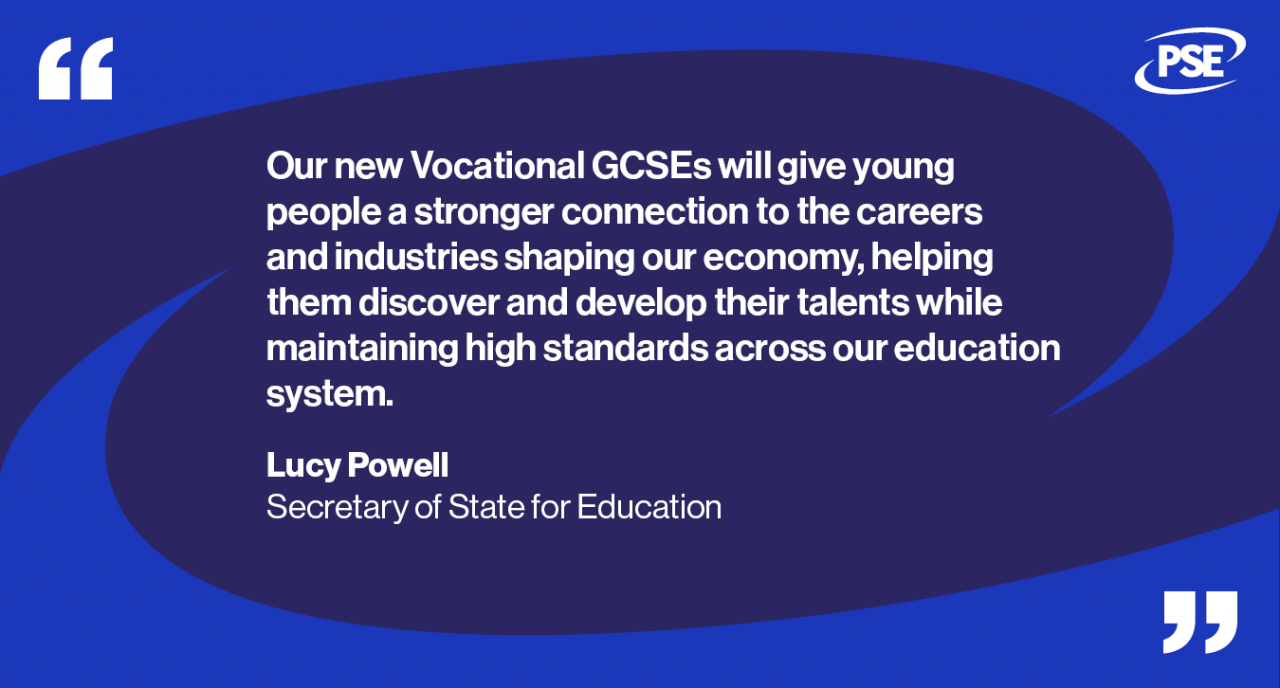
“Our new Vocational GCSEs will give young people a stronger connection to the careers and industries shaping our economy, helping them discover and develop their talents while maintaining high standards across our education system.
“This is not about creating different routes for different children. It is about ensuring every child has access to a rich and ambitious education that opens doors, creates opportunity and prepares them for life beyond the classroom.”
The first Vocational GCSEs are expected to launch in selected subjects from September 2029, as part of wider technical education pathways beginning in September 2028.
For public sector leaders, local authorities, schools, colleges and employers, the reforms represent a significant shift towards a more integrated education and skills system, with stronger links between classrooms, workplaces and regional economic priorities.
If successfully implemented, the reforms could mark one of the most significant changes to technical education in decades, helping employers address skills shortages while giving young people more pathways into rewarding careers.
Image credit: iStock