

Local authorities across England will have access to more than £80 billion in funding next year under the second year of the government’s three-year Local Government Finance Settlement, providing support for key frontline services including social care, waste collection and road maintenance.
The confirmation delivers on plans announced last year and forms part of a wider effort to give councils greater financial certainty after years of one-year settlements that many in local government argued hindered long-term planning and investment.
The government said its reforms are designed to address longstanding concerns that the previous funding model did not adequately reflect local need, resulting in some of the country’s most deprived communities receiving less support than more affluent areas.
Funding changes will continue to be introduced gradually over the course of the three-year settlement, with ministers maintaining support measures to help councils transition to their revised funding allocations.
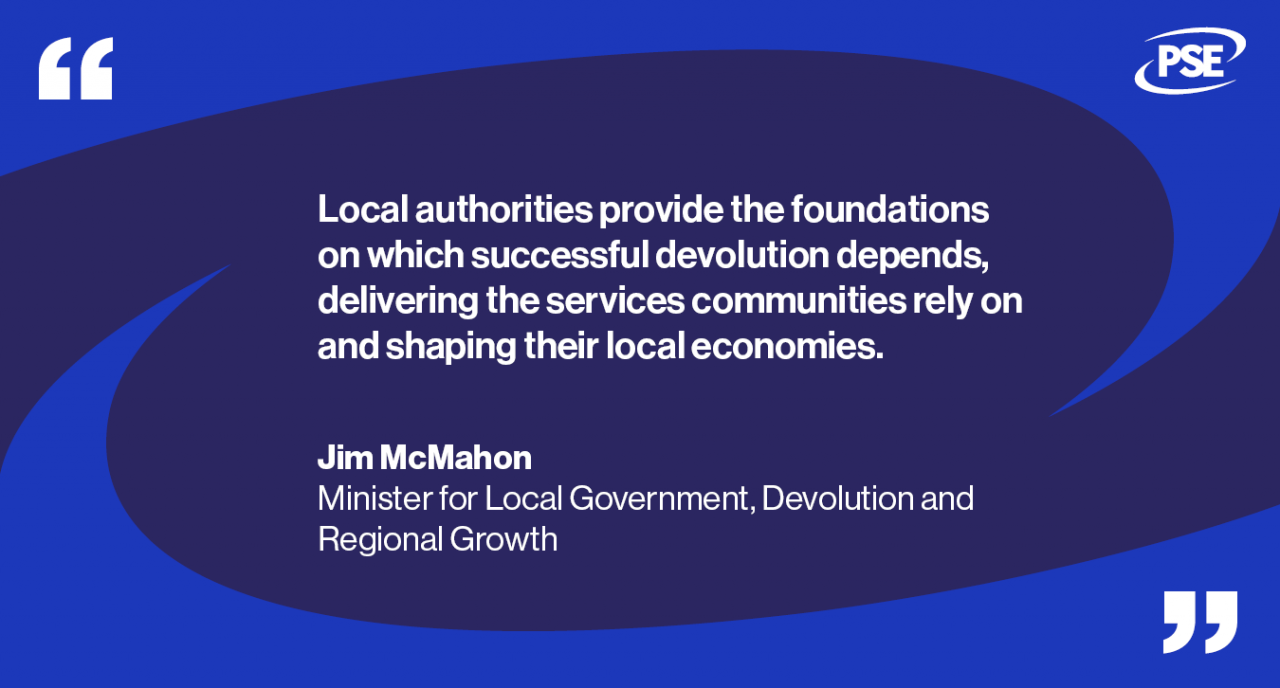
Minister for Local Government, Devolution and Regional Growth, Jim McMahon OBE, said:
“Local authorities provide the foundations on which successful devolution depends, delivering the services communities rely on and shaping their local economies.
“We know that longer-term certainty is vital for local authorities to plan effectively… we are now targeting money where it is needed most, meaning nine in ten councils will receive funding that broadly matches their assessed relative need by the end of the multi-year Settlement, up from around a third before our reforms.”
The newly published Policy Statement gives councils an early indication of measures expected to be included in the Provisional Local Government Finance Settlement later this year.
Greater financial powers for mayors
The government has also outlined plans to strengthen the financial autonomy of directly elected mayors.
This year’s settlement will set out arrangements enabling mayors to receive a share of business rates revenue in place of certain central government grants.
From 2027-28, mayors will also retain 20% of business rates growth generated within their areas, allowing more of the benefits of economic development to be reinvested locally. Further proposals on a pathway towards full business rates retention are expected in future announcements.
Additional funding to tackle rough sleeping
Measures to address rough sleeping will receive a significant boost through an additional £432m announced at the Budget.
The investment, which will be distributed to local authorities and mayors, takes total government funding for tackling rough sleeping to £874m. Ministers said the funding reflects the Prime Minister’s commitment to making homelessness and rough sleeping a national priority.
Council tax limits maintained
The government confirmed that council tax increases will remain capped for most authorities, with rises limited to 5% without requiring a local referendum.
This includes a core threshold of 3%, alongside an additional 2% flexibility for authorities with responsibility for adult social care.
Councils seeking to increase council tax above these limits will need government approval and will only be considered in exceptional circumstances where financial sustainability is at risk and council tax levels remain below the national average.
Separately, households in eligible council tax bands A to D will receive a £100 Household Energy Payment from January 2027 to help with rising energy bills.
Focus on social care and family support
The settlement also reinforces the government’s wider reform agenda for social care, children’s services and special educational needs.
Planned reforms to the Better Care Fund and stronger local authority commissioning arrangements are intended to address long-standing pressures across the adult social care system.
The government said that over £4.6bn in additional funding for adult social care will be available in 2028-29 compared with 2025-26 levels.
Support for foster carers is also increasing, with the National Minimum Allowance set to rise by 2.92% in 2027-28.
Meanwhile, £853m has been allocated through the Children, Families and Youth Grant to support the Families First Partnership programme, helping councils shift their focus towards earlier intervention and preventative support for vulnerable families.
Local authorities participating in SEND reforms will also receive High Needs Stability Grant payments worth around £6bn nationally. The funding is intended to help eliminate accumulated deficits while supporting implementation of reform programmes.
The government said that, together, the additional investment and reforms are designed to place councils on a stronger financial footing, safeguard essential local services and provide greater certainty for long-term planning.
Image credit: iStock