


A new joint report from Ofsted and the Care Quality Commission warns that too many children with special educational needs and disabilities are leaving school unnecessarily due to missed opportunities for early identification and joined-up support.
While some children receive effective help, inspectors found significant inconsistencies in access to key services and multi-agency collaboration. Official data does not show how many children with SEND are out of school, but research from the Children’s Commissioner estimates that a quarter of children entering home education had SEN support.
Parents told inspectors they felt they had no choice but to home educate, citing unmet needs and an overly complex SEND system. School leaders highlighted resource shortages, including staff with the right expertise to identify and meet needs effectively.
Key findings include:
- Limited understanding of EOTAS (Education Otherwise Than at School) arrangements, leading to mismatched expectations between parents and local authorities.
- Health partners often absent from information-sharing processes, leaving children without access to vital services like speech and language therapy or occupational therapy when out of school.
- Capacity challenges and unclear roles causing inconsistent oversight across local areas.
The report also showcases innovative local initiatives, such as partnerships funding nurse educators to train school and transport staff in supporting children’s health needs.
Recommendations include:
- The Department for Education (DfE) should work with local partnerships to ensure early and accurate identification of emerging needs.
- DfE and NHS England should provide resources and training for schools to adopt a needs-led approach.
- Develop national guidance on EOTAS and improve consistency in in-year admissions.
- Ensure health partners are fully involved in information-sharing and coordinated support for children with SEND not in school.
His Majesty’s Chief Inspector Sir Martyn Oliver commented:
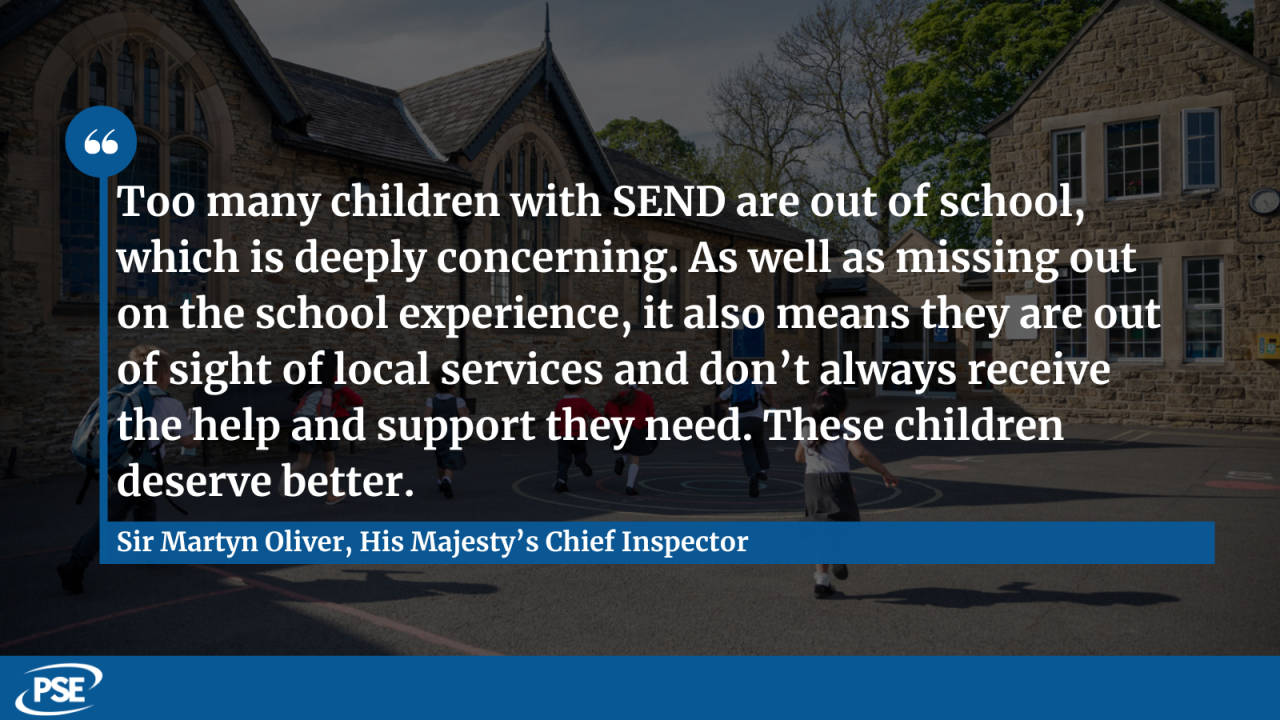
“Too many children with SEND are out of school, which is deeply concerning. As well as missing out on the school experience, it also means they are out of sight of local services and don’t always receive the help and support they need. These children deserve better.
“Although the national picture is worrying, our report also highlights some good practice where local areas have worked together effectively to ensure children with SEND either remain in school or return to full-time education, where appropriate. I hope this report and its recommendations support wider understanding of these issues and real improvements for children with SEND.”
The report calls for urgent action to ensure children with SEND receive coordinated education, health, and social care support, helping them remain in or return to school wherever possible.
Image credit: iStock