


The Government has announced a significant package of investment and reforms aimed at helping more young people access apprenticeships, college places and technical education, as part of its broader mission to strengthen the connection between education and employment.
Designed to ensure no young person is left behind due to a lack of skills, opportunities or support, the measures will provide new financial assistance for families, expand post-16 education capacity and increase access to apprenticeships across England.
The announcement builds on wider reforms that will give 14-year-olds greater access to technical education and meaningful work experience. Together, the changes are intended to create clearer pathways into skilled employment and help local employers access the workforce they need.
A key element of the package is the introduction of a new apprenticeship bursary worth up to £4,500 per year per household. The funding is aimed at removing financial barriers that currently prevent some young people from taking up apprenticeship opportunities.
The bursary specifically targets a small number of families receiving Universal Credit where existing benefits rules can make apprenticeships financially unattractive.
According to a report by the Social Security Advisory Committee, some single parents with a disabled child could lose up to £340 per week in benefits when a young person begins an apprenticeship. This can exceed the average apprenticeship wage of £258 per week, creating a significant financial disincentive.
By bridging this gap, ministers hope more young people will choose apprenticeships, allowing them to earn while they learn and gain the practical skills needed for long-term career success.
The bursary will be funded through the additional £1 billion investment in the Growth and Skills Levy announced earlier this year.
Alongside the new bursary, the Government will fully fund apprenticeship training for all eligible people under 25 from 1 August.
The move forms part of a broader strategy to increase apprenticeship participation and support employers who invest in young talent. Combined with financial incentives for employers, the reforms are expected to help deliver 50,000 new youth apprenticeships before the end of this Parliament.
Work and Pensions Secretary Pat McFadden said:
“Every young person deserves the chance to build a future they can be proud of, and our welfare system should be a springboard to opportunity, not a barrier to it.
“By providing bursaries to those who need them most and fully funding apprenticeship training, we are making sure cost is not the reason someone misses out. Coupled with up to £8,000 in financial support for employers, this is a serious investment in the next generation and in the future of our economy.”
The Government is also expanding capacity within further education and sixth-form provision through an additional £287 million investment.
The funding will create more than 22,000 new places across colleges and post-16 providers through 87 projects in England. Many of the new places will support high-demand sectors, including construction, where courses in bricklaying, plumbing and decorating are expected to be expanded.
The latest investment builds on a wider commitment of £9 billion for 16 to 19 education during 2026-27, helping providers expand high-quality technical and vocational routes.
The reforms come as England continues to face challenges around youth inactivity, with more than one million young people currently classified as not in education, employment or training.
Ministers say increasing the availability of college places, apprenticeships and technical qualifications will help more young people remain engaged in learning and move successfully into employment.
The initiative also forms part of the Government’s wider ambition to raise the profile of vocational and technical education, ensuring practical routes into employment are valued equally alongside traditional academic pathways.
By strengthening links between schools, colleges, employers and local leaders, the Government hopes to establish a more seamless transition from education into skilled work while addressing workforce shortages in key sectors.
The package is being positioned as part of the most significant overhaul of support for young people in a generation. Alongside expanded technical learning, increased work experience opportunities and new vocational qualifications, the reforms aim to create a coherent journey from the classroom into employment.
Education Secretary Lucy Powell said:
“Too many young people face unnecessary barriers to apprenticeships, college places and training. We’re investing to change that.
“This government is determined to help thousands more young people gain the skills, experience, and confidence they need to build successful careers.
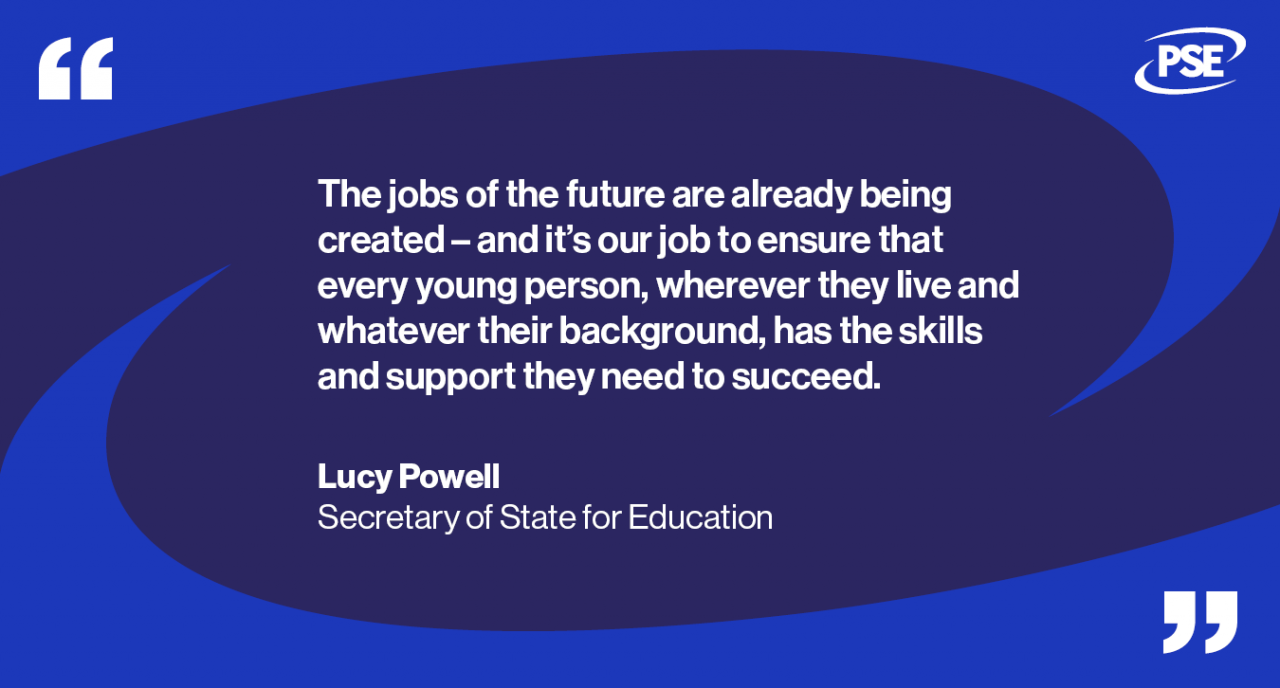
“The jobs of the future are already being created – and it’s our job to ensure that every young person, wherever they live and whatever their background, has the skills and support they need to succeed.”
Image credit: iStock