
People living in Manchester are now experiencing longer lives, according to new Office for National Statistics data covering 2022–2024. The figures show improvements in both male and female life expectancy, marking an important shift for a city that has historically recorded some of the poorest health outcomes in England.
A baby boy born in Manchester today can expect to live 75.6 years, up from 75.1 years in 2021–2023. Meanwhile, life expectancy for baby girls has risen to 80.1 years, compared with 79.1 years previously – a significant one‑year increase.
This progress reflects a continued narrowing of the life‑expectancy gap between Manchester and the national average. The gap for women has reduced from 3.4 years to 3.2 years, while the gap for men remains at 3.9 years.
Manchester City Council says the gains are linked to wide‑ranging efforts to address health inequality, especially since the COVID‑19 pandemic exposed sharp disparities across different communities.
Central to these efforts is the Making Manchester Fairer programme, established in 2022 to help rebuild a healthier, fairer city. The programme focuses on the underlying social conditions that influence health, including income, housing, employment and access to services.
The Council has also worked with national partners to target long-standing issues while responding to the ongoing cost‑of‑living crisis, which continues to impact residents’ physical and mental well-being.
A key part of Manchester’s strategy involves ensuring communities’ voices shape local services. The Council has developed community forums to allow residents to influence decision-making and identify what support they need most. This approach aims to improve trust in public services, remove barriers to support, and tailor interventions to real‑world challenges faced by Manchester’s diverse neighbourhoods.
Lessons from the pandemic highlighted significant differences in health outcomes linked to ethnicity. In response, the Council has expanded work to understand and reduce racial inequalities in healthcare access, experiences and outcomes.
This includes targeted engagement, improved data insight and working with communities that have historically faced greater health challenges.
Manchester’s leaders emphasise that poverty and deprivation remain decisive factors in determining health outcomes and life expectancy. The cost‑of‑living crisis has underscored the scale of the challenge, prompting major investment in support.
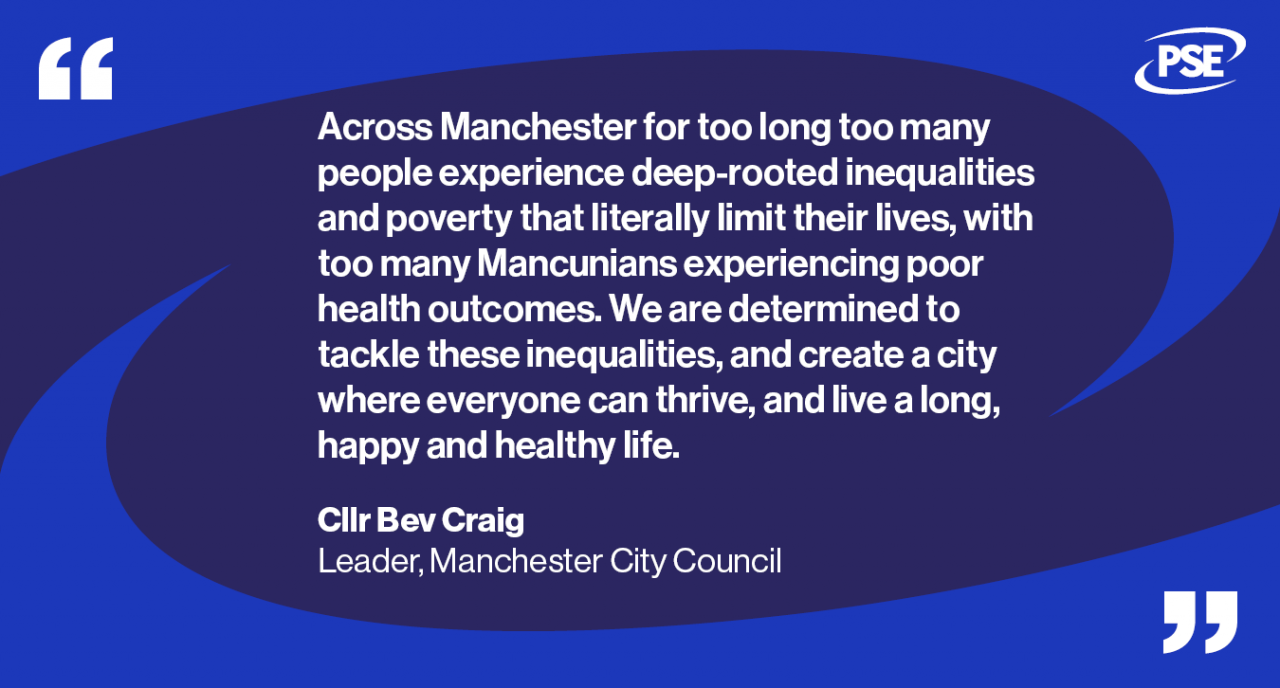
Leader of Manchester City Council, Cllr Bev Craig, said:
“Across Manchester for too long too many people experience deep-rooted inequalities and poverty that literally limit their lives, with too many Mancunians experiencing poor health outcomes. We are determined to tackle these inequalities and create a city where everyone can thrive and live a long, happy and healthy life.
“We still have a long way to go, but this shows that focusing our efforts to tackle health inequalities and investment in our NHS and council wellbeing services can deliver results. And, as we continue to roll out our flagship Making Manchester Fairer programme, we want to reiterate that our work will not stop until everyone in our city shares its success and we end the gap between Manchester and elsewhere.”
Measures include:
- Millions of pounds in additional support to prevent residents falling into hardship
- Financial support services placed directly within healthcare settings
- A dedicated cost‑of‑living advice line, offering free help for issues ranging from debt to food access
These interventions are designed to protect vulnerable households and mitigate the health inequalities linked to economic stress.
While the latest data points to meaningful progress, the Council acknowledges that further work is required to close the life‑expectancy gap completely.
The improvements, they say, should serve as a motivating benchmark – a reminder of the impact of long‑term investment, partnership working and community‑centred policymaking.
Manchester aims to continue building on the MMF programme and wider health equity initiatives to ensure all residents, regardless of postcode or background, can live longer, healthier lives.
Image credit: iStock